Musty Smell in House: How to Find the Source and Get Rid of It
Contents
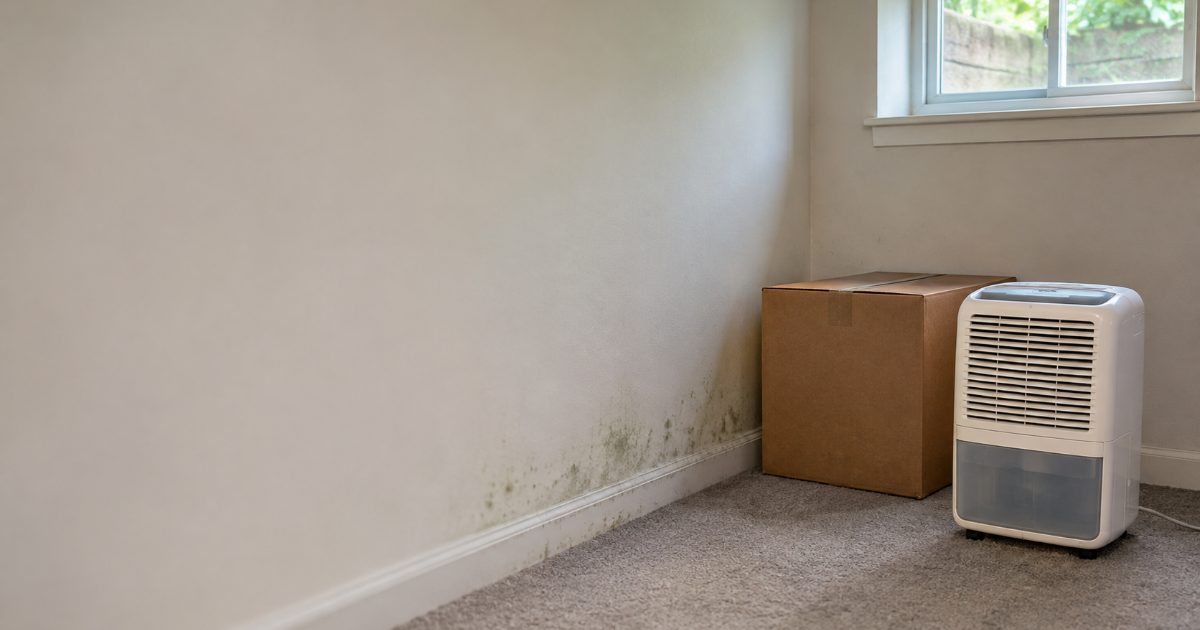
A musty smell in your house almost always means something is staying damp long enough for mold or mildew to grow, and the fix is to find that wet spot, dry it out, and keep indoor humidity below 50%.
- What works: find the moisture source, get humidity to 30–50%, clean or remove the moldy material.
- How long: the odor usually fades within days to a few weeks once the source is dry and the moldy material is gone.
- Call a pro: mold over about 10 sq ft, sewage water, suspected mold in your HVAC, or a smell you can’t trace.
Musty smell in house: what to do right now
The smell is a clue, not the problem. The Minnesota Department of Health puts it plainly: if you see or smell mold, assume a problem exists. The EPA adds that you may suspect hidden mold when a building smells moldy but you can’t see the source.
Start with these steps today:
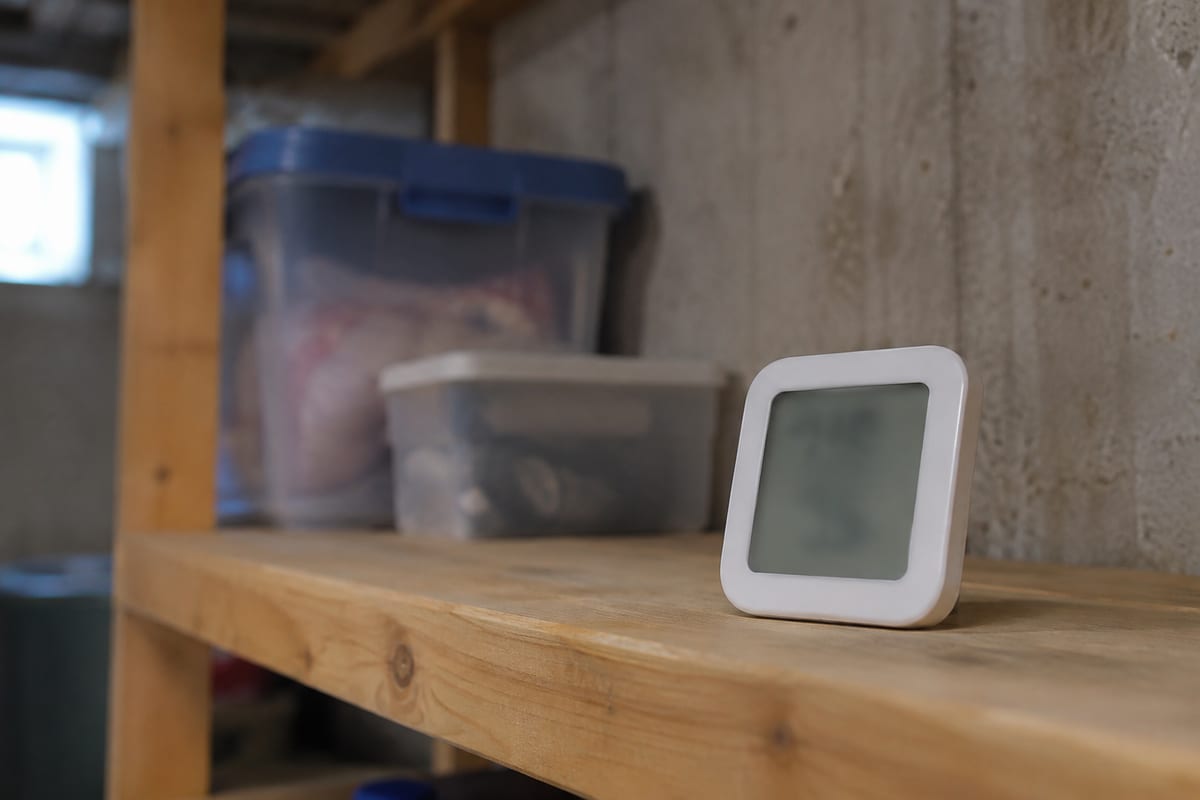
- Buy a hygrometer (a cheap digital humidity meter) and check the smelly room, the basement, and a "normal" room. Write down the readings.
- Follow your nose, room by room. The smell is strongest closest to the source. Open closets, sink cabinets, and the basement door one at a time.
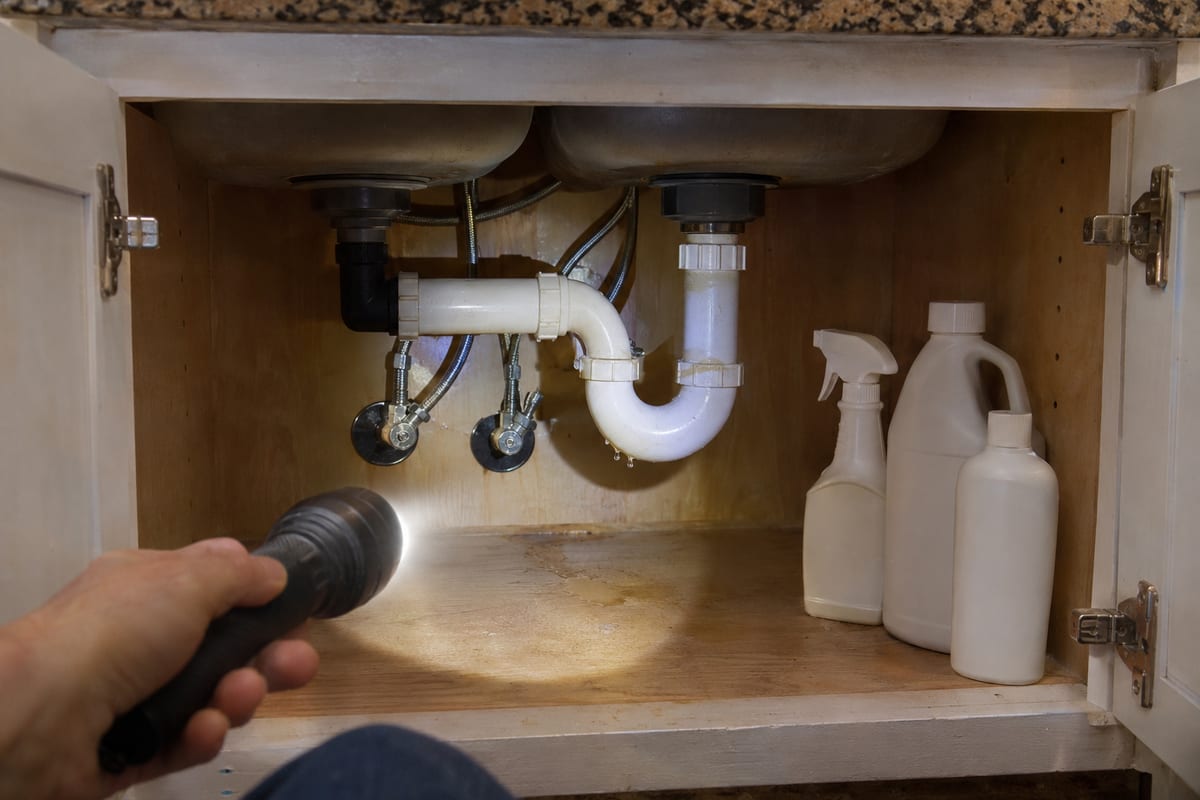
- Look for water. Check under sinks, around the toilet base, the water heater, the washing machine hoses, and below windows.
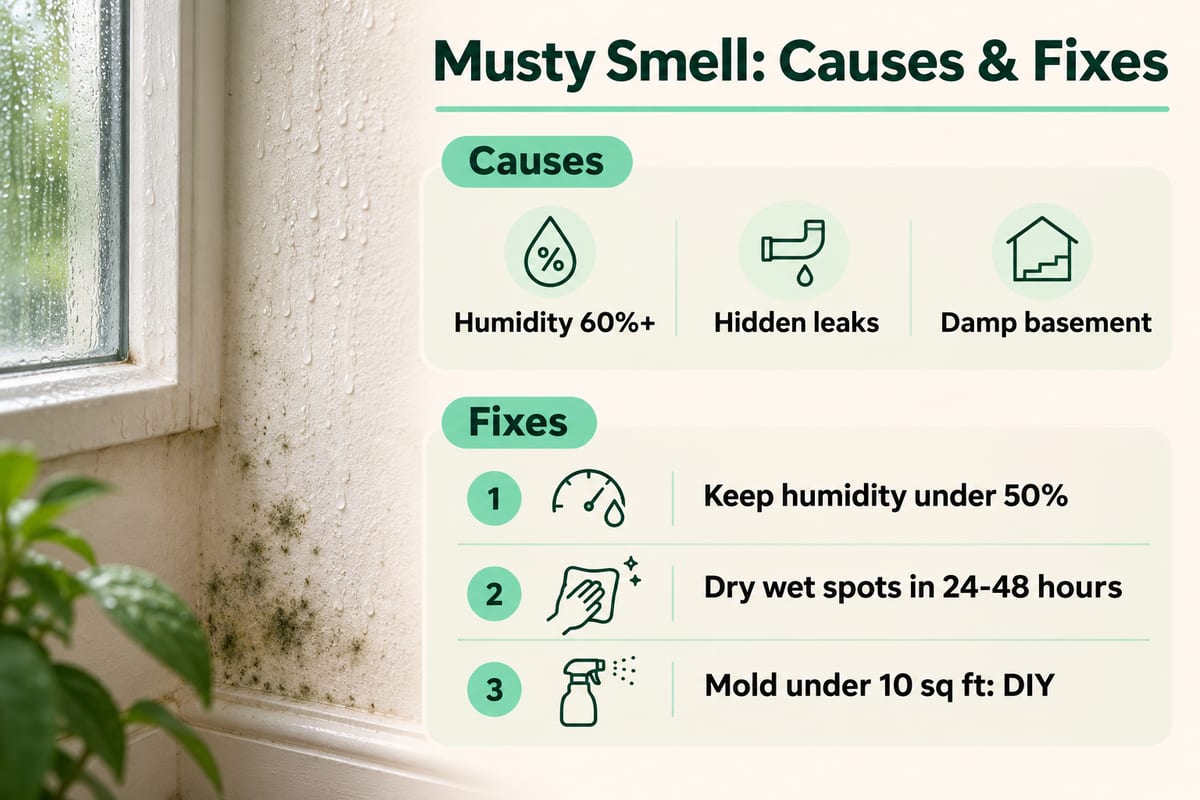
- Dry anything wet within 24–48 hours. The EPA's guidance is that mold usually won't grow if damp materials are dried in that window. Use fans and a dehumidifier.
- Don't cover it up. Air fresheners and candles mask the odor while the mold keeps growing.
Why your house smells musty: mold gases and humidity over 60%
That earthy, stale odor comes from gases that mold and other microbes release as they grow, often called microbial volatile organic compounds (MVOCs), as the EPA explains. CDC notes simply that mold “can smell musty.”
Mold needs three things you can’t easily remove from a home (spores, food like dust, wood, and paper, and a comfortable temperature) plus one you can: moisture. That is why every fix comes back to water.
The EPA recommends keeping indoor relative humidity below 60%, ideally between 30% and 50%. The CDC is stricter and says no higher than 50%, all day long. If your hygrometer reads 60% or more in one area, you have found a strong lead.
Common reasons the smell shows up:
- It comes and goes. Smell that appears after rain or on humid summer days points to a basement, crawl space, or foundation that gets wet with the weather.
- It shows up when the heat or AC comes on. Air moving through ducts picks up odor from a damp drain pan, coil, or duct.
- Your clothes smell musty too. Closets on outside walls stay cooler and can collect moisture; see our guide to why condensation forms on walls and corners.
- After vacation. A closed-up house with the AC off can climb in humidity fast, and a dry drain trap or slow plumbing leak gets worse unnoticed.
Find the source room by room
Work from the most likely spots to the least. The EPA lists these hidden-mold locations: the back side of drywall, wallpaper, or paneling, the top side of ceiling tiles, the underside of carpets and pads, inside walls around leaking or condensing pipes, walls behind furniture where condensation forms, and inside ductwork.
| Where | What to check | Typical cause |
|---|---|---|
| Basement | Lower walls, carpet and pad, stored boxes, under stairs | Damp foundation, humidity over 60%, past flooding |
| Crawl space | Bare soil, standing water, wet insulation, wood joists | Ground moisture, poor drainage |
| Bathroom | Under the sink, behind the toilet, ceiling, caulk lines | Shower steam, slow leaks, no exhaust fan |
| Kitchen | Sink cabinet floor, under the dishwasher and fridge | Drain or supply line leaks |
| Bedrooms and closets | Outside-wall corners, behind dressers and beds | Condensation on cold walls |
| HVAC | Drain pan, drain line, filter, air handler cabinet | Standing water in the pan, clogged line |
| Laundry | Washer hoses, dryer vent, door gasket of front-loaders | Leaks, dryer venting indoors |
Source: US EPA, A Brief Guide to Mold, Moisture and Your Home; Minnesota Department of Health, Mold in Homes.
The Minnesota Department of Health also suggests searching behind and underneath furnishings and stored items, and under carpet and pad, wallpaper, vinyl flooring, sink cabinets, and drywall.
Basements and crawl spaces: the most common culprits
Below-grade spaces sit against cool, damp soil, so humidity climbs there first. A musty basement often smells worst in summer, when warm, humid air meets cool concrete.
What to do in a basement:
- Run a dehumidifier and aim for a reading under 50%. Keep doors and windows to the space closed while it runs, as ENERGY STAR recommends, so it isn’t drying the outdoors.
- Get boxes, rugs, and cardboard off the floor and away from walls. Use plastic bins on shelves instead.
- Check that gutters and downspouts carry water away from the foundation.
- Throw out moldy porous items. The EPA notes that absorbent materials such as carpet and ceiling tiles may have to be discarded if they grow mold.
For crawl spaces, look for standing water, wet insulation hanging from the floor above, and dark staining on joists. Montana State University Extension recommends covering bare crawl space soil with 6-mil plastic sheeting to keep ground moisture down. Whether a crawl space should be vented or sealed depends on your climate and local building code, so get local advice before changing vents.
Air from a crawl space or basement moves up into the living areas, which is why a damp space you rarely visit can make the whole house smell.
HVAC: musty smell when the AC or heat comes on
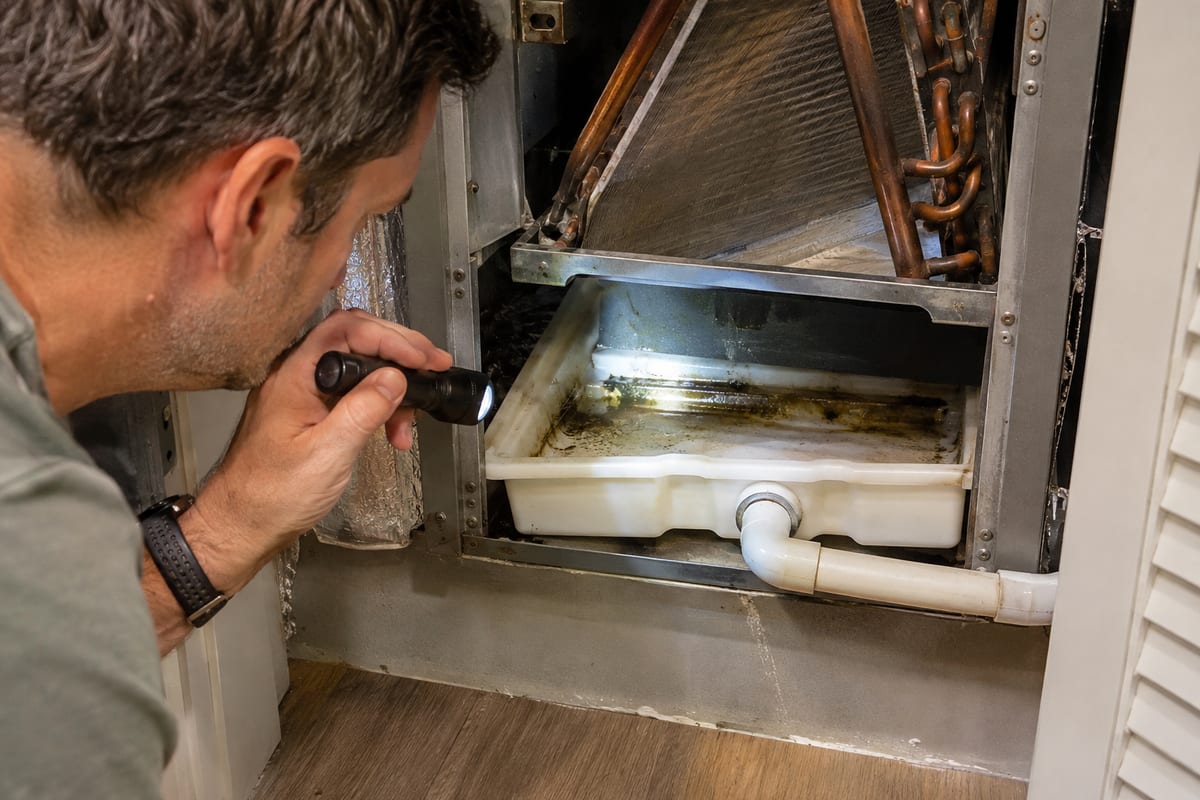
If the smell shows up the moment the system starts, look at the equipment before the rooms. The EPA identifies cooling coils and drain pans as major moisture sources and says pans should drain properly with no standing water.
Quick checks you can do:
- Change the air filter.
- Open the access panel (power off) and look at the drain pan. Standing water, slime, or dark growth is a problem.
- Make sure the condensate drain line is flowing, not backed up.
- Check for wet or stained insulation around the air handler.
Duct cleaning is not an automatic fix. The EPA says it is warranted when there is substantial visible mold inside hard ducts, that lookalike substances may need lab confirmation, and that mold will come back if the moisture problem isn’t corrected. It also notes that the benefits of spraying biocides or sealants in ducts haven’t been demonstrated.
Clean it yourself or call a pro: the 10 sq ft rule
Once you find the mold, the size of the area decides who cleans it. The EPA says that if the moldy area is less than about 10 square feet (roughly a 3 ft by 3 ft patch, about 1 m²), you can usually handle it yourself.
| Situation | DIY or pro |
|---|---|
| Under about 10 sq ft on hard surfaces | DIY: scrub with detergent and water, dry completely |
| Moldy carpet, ceiling tiles, insulation, drywall | Usually remove and replace rather than clean |
| More than 10 sq ft, or heavy water damage | Follow EPA remediation guidance; hire a contractor experienced with mold |
| Damage from sewage or flood water | Professional |
| Mold in the HVAC system | Professional |
| Someone in the home has asthma or a weak immune system | Talk to a doctor first; consider a pro |
Source: US EPA, Mold Cleanup in Your Home and A Brief Guide to Mold, Moisture and Your Home; Minnesota Department of Health.
For small DIY jobs, follow the EPA’s basics:
- Fix the water first. Cleaning mold off a wall that stays wet just buys time.
- Protect yourself. Wear an N-95 respirator, long gloves that reach mid-forearm, and goggles without vent holes.
- Scrub hard surfaces with detergent and water, then dry them completely.
- Bag and discard moldy porous materials such as carpet pad, ceiling tiles, and wet cardboard.
- Dry the area with fans and a dehumidifier, then recheck humidity over the next few days.
What doesn’t work (and why)
- Air fresheners, candles, and plug-ins. They cover the odor while the mold keeps growing. The smell returns as soon as they run out.
- Air purifiers alone. A purifier may cut some odor, but it can’t dry a wet wall. Mold grows on the material, not in the air.
- Painting over mold. The EPA says not to paint or caulk moldy surfaces: clean and dry them first, because paint applied over mold is likely to peel.
- Mold test kits and air testing. The CDC does not recommend mold testing, and there are no set standards for acceptable mold levels. Spores are always present indoors, so a “positive” result tells you little. The EPA says sampling is usually unnecessary when mold is visible.
- Spraying bleach on drywall or carpet. The EPA does not recommend bleach as a routine step, and porous materials that have grown mold often have to be thrown away. Removing and replacing them is the reliable fix.
- Opening windows on humid days. In humid summer weather, outdoor air can be as wet as indoor air, so open windows can raise basement humidity instead of lowering it.
When to call a professional
Call a mold remediation contractor, a plumber, or an HVAC technician when:
- The moldy area is larger than about 10 sq ft, or the water damage is extensive.
- The damage came from sewage or flood water.
- You suspect mold inside the HVAC system or ductwork.
- The smell is strong and you can’t find the source after checking every room.
- You see repeated water in the basement or crawl space after rain.
- Someone in the home has asthma, a mold allergy, chronic lung disease, or a weakened immune system. The CDC notes these people can have more severe reactions.
If you hire help, the EPA advises choosing a contractor with experience cleaning up mold. Be wary of anyone who sells testing before inspecting, or who promises a fix without explaining where the water is coming from.
Health effects of a musty house: keep it in perspective
Reactions vary from person to person. The CDC lists a stuffy nose, sore throat, coughing or wheezing, burning eyes, and skin rash as possible reactions in some people.
The World Health Organization’s guidelines on dampness and mould found that the most important effects are more respiratory symptoms, allergies, and asthma, and that preventing persistent dampness is the most important way to avoid them. That’s the practical takeaway: dry the house, and the health risk drops with the smell.
Damp homes also attract moisture-loving pests. If you’re seeing tiny silver insects near the tub, read our guide to silverfish in the bathroom, which share the same humidity fix.
Closing checklist
- Hygrometer in the basement and main rooms, reading under 50% (never above 60%)
- All leaks found and fixed; wet materials dried within 24–48 hours
- Basement storage off the floor and away from walls
- Crawl space soil covered, no standing water
- AC drain pan clean, drain line flowing, filter changed
- Bathroom and kitchen fans vent outdoors and get used
- Small mold patches scrubbed; moldy porous items thrown out
- Pro called for anything over 10 sq ft, sewage, or HVAC mold
Frequently asked questions
What causes a musty smell in a house?
In most homes it is mold or mildew growing on something that stays damp: a basement wall, carpet pad, the back of drywall, an AC drain pan, or soil in a crawl space. The smell comes from gases the mold gives off as it grows. Fix the moisture and the smell usually fades once the moldy material is cleaned or removed.
Is a musty smell in the house dangerous?
The smell itself is a warning sign, not a diagnosis. According to the CDC, mold can cause a stuffy nose, sore throat, coughing or wheezing, burning eyes, or skin rash in some people, and people with asthma or mold allergy may react more severely. If anyone in the home has health concerns, talk to a doctor before starting cleanup.
Why does my house smell musty but I can't find any mold?
Mold often grows out of sight, on the back of drywall or wallpaper, under carpet pads, on the top of ceiling tiles, inside walls around pipes, or inside ductwork, according to the EPA. Check humidity first, then look behind furniture on outside walls and under sinks. If the smell persists and you can't find it, an experienced inspector can look inside cavities.
Why does my house smell musty when the AC is on?
Air conditioners pull water out of the air on the cooling coil, and that water collects in a drain pan. If the pan holds standing water or the drain line clogs, mold can grow there and the blower spreads the odor. The EPA advises keeping drip pans clean and drain lines flowing, and not running a system you suspect is moldy.
Should I test my house for mold?
Usually not. The CDC does not recommend mold testing, and the EPA says sampling is unnecessary in most cases where mold is visible. There are no accepted limits for safe mold levels, so the money is better spent finding and fixing the moisture.
Will an air purifier or air freshener get rid of the musty smell?
They may reduce the odor for a while, but they do not touch the source. As long as a material stays wet, mold keeps growing and the smell returns. Drying the area and cleaning or removing the moldy material is what ends it.
Sources
- US EPA — A Brief Guide to Mold, Moisture and Your Home
- US EPA — Mold Cleanup in Your Home
- CDC — About Mold and Your Health
- Minnesota Department of Health — Mold in Homes
- US EPA — Should You Have the Air Ducts in Your Home Cleaned?
- US EPA — Mold Remediation in Schools and Commercial Buildings, Chapter 4
- Montana State University Extension — Controlling Condensation in the Home
- WHO — Guidelines for Indoor Air Quality: Dampness and Mould
- US EPA — What Does Mold Smell Like?
- ENERGY STAR — Dehumidifiers