Carpet Beetles: How to Identify, Find, and Get Rid of Them
Contents
- What carpet beetles look like: 1/8-inch round beetles and bristly larvae
- Should you be worried about carpet beetles? Adults at the window vs larvae in the closet
- Carpet beetles vs bed bugs: how to tell them apart
- Where carpet beetles breed: lint, pet hair, nests, and dead insects
- How to get rid of carpet beetles in 7 steps
- What doesn’t work (and why)
- When to call a professional
- Prevent carpet beetles: screens, cut flowers, and sealed storage
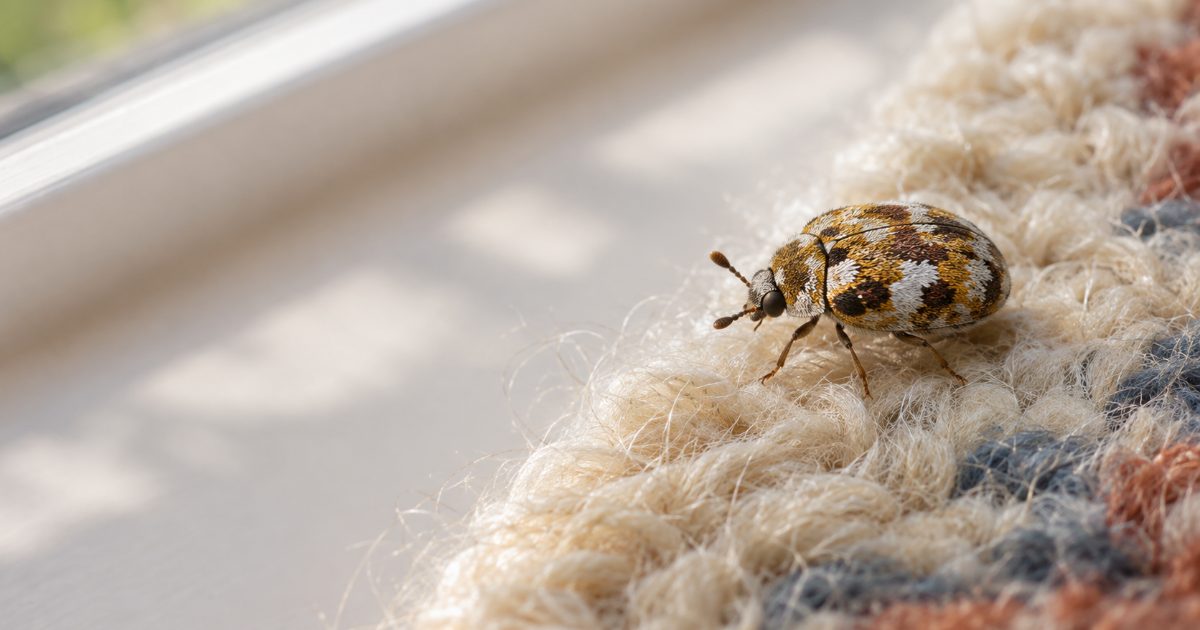
Carpet beetles are tiny, round beetles, about 1/16 to 1/8 inch (1.5–3 mm) long, whose fuzzy larvae chew holes in wool, fur, silk, feathers, and leather; the adults you see at windows are mostly harmless, but larvae mean there’s a food source somewhere in your home that needs cleaning out.
- What works: finding the breeding spot (lint, pet hair, stored wool, old nests), then vacuuming, hot washing, dry cleaning, or freezing infested items.
- How long: a day or two of cleanup, then a year of watching, since larvae can take up to 630 days to mature.
- When to call a pro: beetles keep appearing after a full cleanup, or the source is in walls, the attic, ducts, or valuable rugs and collections.
What carpet beetles look like: 1/8-inch round beetles and bristly larvae
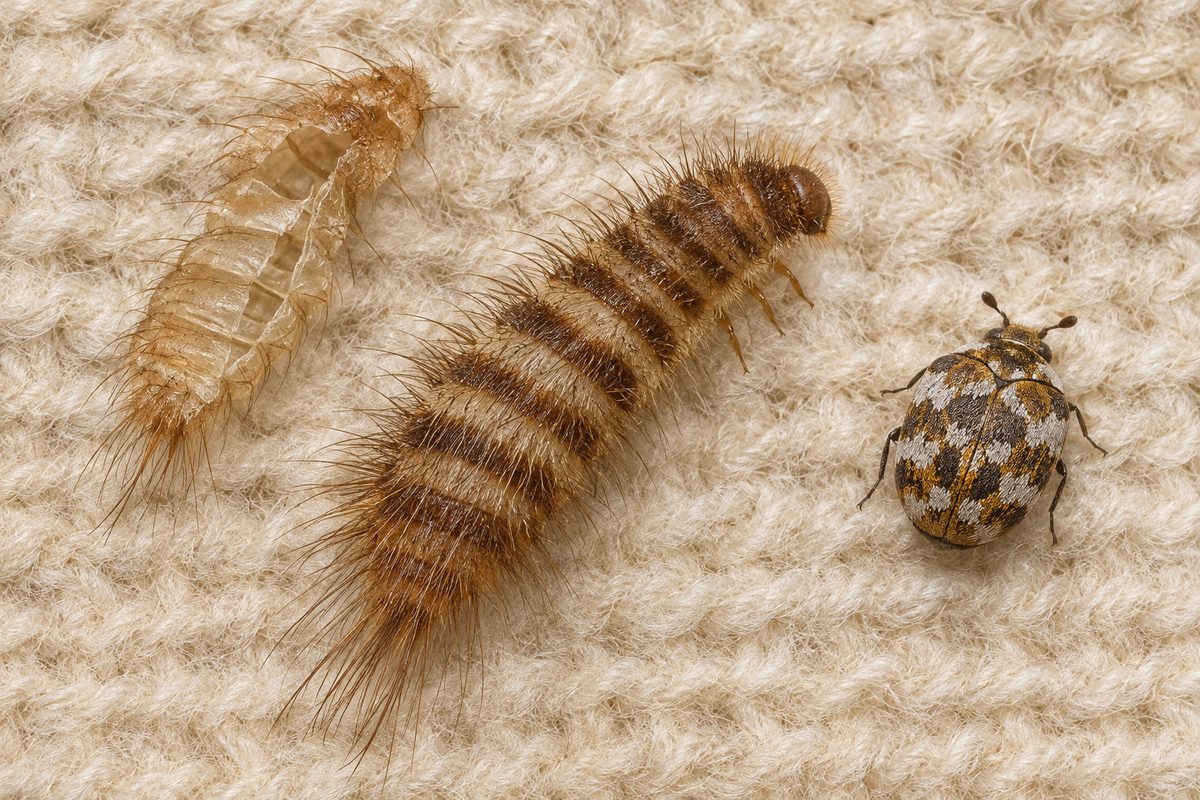
There are three carpet beetles you’re likely to meet in a US home. All are small, with rounded bodies and short antennae. The adults are easy to mistake for tiny ladybugs or specks of dirt.
| Species | Adult | Larva |
|---|---|---|
| Varied carpet beetle (Anthrenus verbasci) | About 1/10 inch (2.5 mm), round, black with an irregular pattern of white, brown, and yellow scales | Covered in dense hair tufts, wider at the rear, banded light and dark brown |
| Furniture carpet beetle (Anthrenus flavipes) | Slightly larger and rounder than the varied, mottled, white underneath | White at first, darkening to reddish or chestnut brown |
| Black carpet beetle (Attagenus unicolor) | 1/8–3/16 inch (3–5 mm), shiny black or dark brown, more oval | Up to 5/16 inch (8 mm), shiny, tapering, ending in a long tuft of hairs like a tail |
Source: UC IPM Pest Notes: Carpet Beetles.
The larvae are what you’ll find in closets and under furniture. The University of Kentucky describes them as 1/8 to 1/4 inch (3–6 mm) long, tan to brown, slow moving, and densely covered in hairs or bristles. As they grow, they shed their skins, and those empty, bristly brown husks are often the first sign people notice.
Carpet beetles vs clothes moths
Both pests eat the same animal fibers, so the damage looks similar. UC IPM gives a simple rule: carpet beetle damage tends to be concentrated in one area and comes with bristly cast skins but no webbing. Clothes moth damage is more scattered and comes with silk webbing or small cases. If you’re seeing small golden moths in the closet, read our guide on how to get rid of clothes moths. The treatment overlaps, and many homes have both.
Should you be worried about carpet beetles? Adults at the window vs larvae in the closet
It depends on which stage you’re seeing.
Adult beetles on a windowsill: Adult carpet beetles feed on flower pollen and nectar and don’t damage fabric. They’re drawn to sunlight, so they gather at windows, sills, and drapes, especially in spring. They can fly in from outdoors or ride in on cut flowers. UC IPM says a few adults indoors are not a cause for alarm.
That said, the University of Kentucky notes that adults on windowsills in spring can suggest an infestation inside. Adults found indoors may have grown up indoors. So treat a few beetles as a reason to check, not to panic.
Larvae or shed skins anywhere: This is the signal to act. Larvae mean a breeding site, and they feed slowly and quietly for a long time. Varied carpet beetle larvae can spend 220 to 630 days feeding before they pupate, according to UC IPM. A female lays roughly 40 to 100 eggs depending on the species, so a small problem can grow over a couple of seasons without anyone noticing.
What’s at risk: wool sweaters, coats, and blankets; rugs (especially edges and undersides); down pillows and comforters; felt; furs; feathers; leather; upholstery; taxidermy; natural-bristle brushes. Some carpet beetles also infest cereal, seeds, dried plant products, and pet food. Cotton and synthetics are rarely eaten unless blended with wool or stained with food or body oils.
Carpet beetles vs bed bugs: how to tell them apart
People often search “carpet beetles in bed” because they find a small bug on the sheets and fear the worst. These two insects are easy to separate once you know what to look for.
| Carpet beetle (adult) | Bed bug (adult) | |
|---|---|---|
| Size | About 1/16–1/8 inch (1.5–3 mm) | About 1/5 inch (5 mm) |
| Shape | Round, domed, ladybug-like | Flat, oval |
| Color | Mottled white, brown, yellow, or solid black | Rusty red to mahogany |
| Wings | Yes, flies to sunny windows | Wingless |
| Food | Adults: pollen. Larvae: wool, fur, hair, lint, dead insects | Blood only, mostly at night |
| Signs left behind | Bristly brown shed skins, holes in animal-fiber items | Dark fecal spots on sheets and mattress seams, light-brown shed skins |
Source: UC IPM Pest Notes: Carpet Beetles; UC IPM Pest Notes: Bed Bugs; University of Kentucky ENTFACT-601.
If you’re still unsure, trap the insect in a sealed bag or a piece of clear tape without crushing it and take it to your county extension office for identification. Treating the wrong pest wastes money and exposes your household to pesticides it didn’t need.
The rash: carpet beetle larvae don’t bite, but their hairs can irritate skin
Carpet beetles don’t bite. But larvae, especially of the Anthrenus species, carry tiny barbed hairs that can stick in the skin and cause an itchy rash.
A 2021 report in the CDC journal Emerging Infectious Diseases described 11 people in 7 families in France with itchy red bumps that lasted about a week. The bumps were mostly on skin covered by clothing, and no bed bugs or fleas were found in the homes. The authors note this type of dermatitis is underdiagnosed and often confused with bed bug or flea bites. After the rashes were treated and clothing was washed, infested areas vacuumed, and air conditioning units cleaned, no new lesions appeared over the next month.
Utah State University Extension adds that larval hairs can irritate the throat if swallowed. If you have an unexplained rash, see a doctor, and mention carpet beetles if you’ve found larvae or shed skins.
Where carpet beetles breed: lint, pet hair, nests, and dead insects
To get rid of carpet beetles, you must find what the larvae are eating. The University of Kentucky’s list of common sources includes:
- Lint and pet hair under baseboards, inside floor vents and heating ducts, and under furniture.
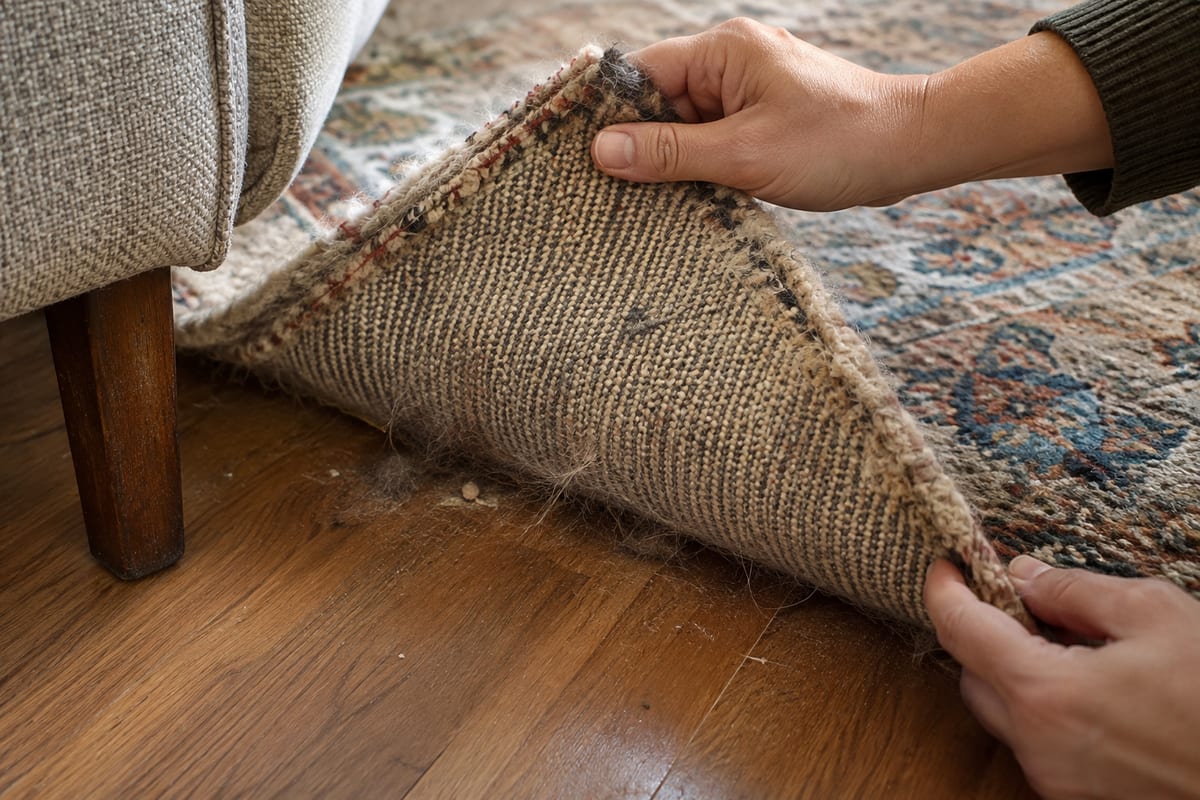
- Edges and undersides of rugs and carpet, especially under heavy furniture where vacuums don’t reach. Rugs that are walked on and vacuumed regularly are rarely attacked.
- Stored wool and fur: a rarely worn wool hat on a closet shelf, a scarf in a bin, an antique rug in the basement.
- Bird and rodent nests in attics, chimneys, and walls. Old mouse nesting material is a classic source; if you’ve had rodents upstairs, see our guide to getting rid of mice in the attic.
- Dead insects collected in light fixtures, window frames, and attics, such as cluster flies, lady beetles, stink bugs, and wasps.
- Stored foods such as cereal, birdseed, dried plant material, and pet food, including food cached by rodents.
Because the diet is so broad, carpet beetles can turn up almost anywhere in a home, including bathrooms and kitchens. If you’re also seeing slender, silvery insects in damp rooms, those are a different pest; see our guide to silverfish in the bathroom.
How to get rid of carpet beetles in 7 steps
The extension approach is mostly cleaning, not spraying. UC IPM says that when sanitation works, insecticides are unnecessary.
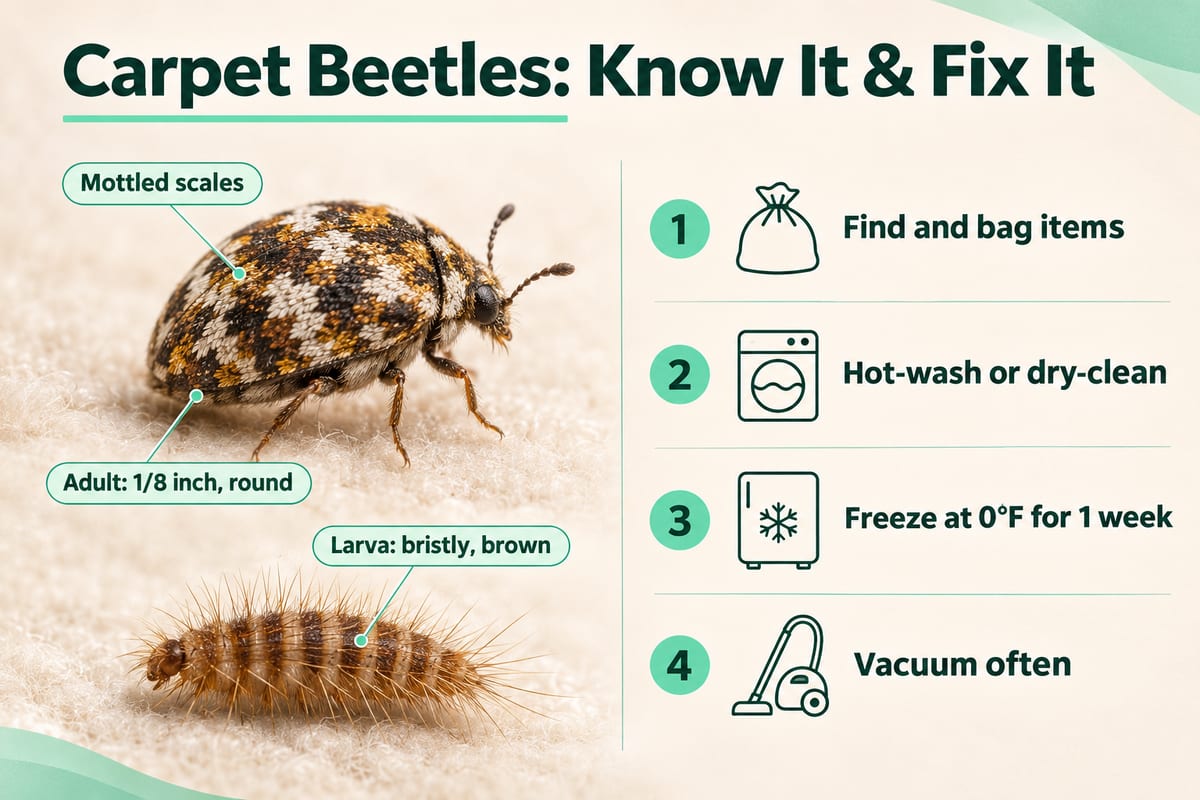
- Find every infested item. Check seams, folds, collars, and cuffs of wool clothing; closet shelves; under and inside upholstered furniture; rug edges and undersides. The University of Kentucky suggests lifting wall-to-wall carpet off the tack strip with needle-nose pliers to look underneath.
- Bag what you find. Seal infested items in plastic bags before moving them through the house. Throw out items that are too damaged to save, still bagged.
- Kill larvae and eggs in washable items. Hot washing, a hot dryer cycle, or dry cleaning kills all stages.
- Freeze what you can't wash. Seal the item in a plastic bag and hold it at 0°F (-18°C) for at least a week, or 72 hours at -20°F (-29°C). Let it warm in the bag for about 24 hours before opening.
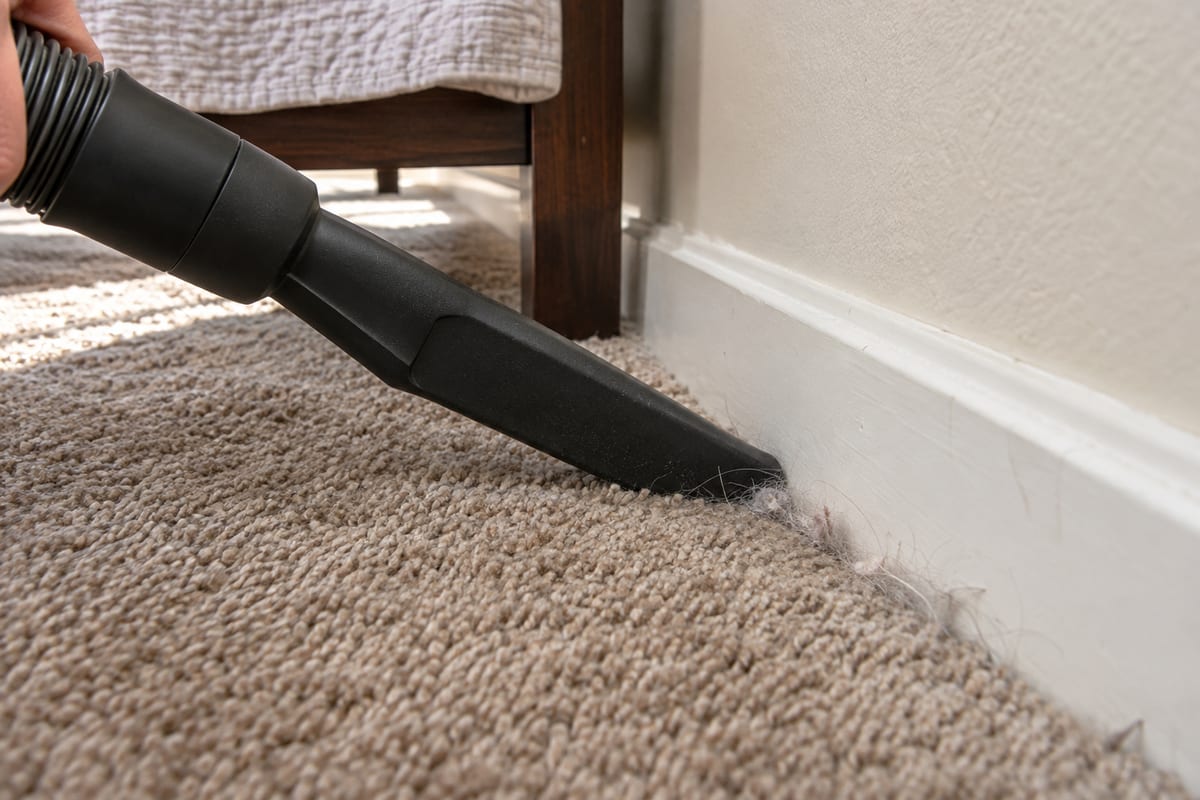
- Vacuum thoroughly, then often. Floors, rug edges, baseboards, under furniture, inside closets, inside heating vents, and window sills. Empty the canister or toss the bag outside right away.
- Remove outside food sources. Clean out dead insects from light fixtures and windows, and have old bird or rodent nests removed from the attic or chimney. Store cereal, birdseed, and pet food in sealed containers.
- Spot-treat only if needed. An insecticide labeled for carpet beetles can supplement cleaning on carpet edges, floor-wall joints, under furniture, and closet floors. Follow the label: the label is the law. Never spray clothing or bedding, keep kids and pets off treated areas until dry, and never use outdoor products indoors.
For heat, UC IPM also lists holding items at 120°F (49°C) or higher for at least 30 minutes, but check that heat won’t damage the item first.
What doesn’t work (and why)
Spraying the whole house. Larvae live inside fabric folds, rug backing, vents, and nests where sprays don’t reach. The University of Kentucky says sprays are often of limited use against carpet beetles. Without removing the food source, beetles return.
Spraying clothes or bedding with insecticide. Extension guidance is clear: don’t. Wash, dry-clean, or freeze them instead.
Killing only the adults. Swatting beetles at the window doesn’t touch the larvae, which do all the damage and can feed for over a year.
Mothballs scattered in a closet. Mothballs (naphthalene or paradichlorobenzene) are pesticides that only work at high vapor concentrations inside a sealed container. The National Pesticide Information Center says using them in a way the label doesn’t allow is illegal and can harm people, pets, and the environment. The University of Kentucky warns never to scatter them in open closets or where children or pets can reach them.
Cedar chests and cedar blocks. The University of Kentucky says cedar closets and chests are seldom effective because they can’t hold enough cedar oil vapor to kill or repel fabric pests. UC IPM adds that cedar oil fades over time.
Assuming you don’t have them because you don’t have carpet. Larvae thrive on lint, pet hair, and dead insects in vents, closets, and attics, so hard floors don’t rule them out.
When to call a professional
Call a licensed pest control company or a specialist if:
- Beetles or larvae keep appearing after you’ve cleaned, washed, and vacuumed thoroughly, and you can’t find the source.
- The source is in a wall void, attic, chimney, or ductwork you can’t safely reach, especially if an animal nest is involved.
- Wall-to-wall carpet across several rooms is infested.
- Valuable rugs, furs, textiles, or collections are at risk. UC IPM notes that fumigation by licensed professionals kills all stages, though it won’t prevent the beetles from returning.
Prevent carpet beetles: screens, cut flowers, and sealed storage
- Clean before you store. Wash or dry-clean wool and other animal-fiber items before putting them away. Cleaning kills eggs and larvae and removes the body odors that attract them.
- Store sealed. Use tight-fitting plastic bags or bins with snug lids for off-season clothing, blankets, and down items.
- Vacuum the forgotten places. Under beds and sofas, rug edges, closet floors, baseboards, and vent covers, where lint and pet hair build up.
- Check screens, doors, and vents for gaps adults can fly through.
- Shake out cut flowers outdoors before bringing them in.
- Keep attics clear of dead insects and old nests.
- Air and brush stored woolens in the sun once a year, as UC IPM suggests.
Carpet beetle checklist
- Insect identified: round adult or bristly larva, not a flat red bed bug
- Closets, rug edges, under-furniture areas, vents, and stored wool inspected
- Infested items bagged, then washed hot, dried hot, dry-cleaned, or frozen at 0°F (-18°C) for a week
- Floors, baseboards, vents, and closets vacuumed; vacuum emptied outside
- Dead insects and old nests removed; dry foods sealed
- Off-season wool and down stored clean and sealed
- Sticky traps checked weekly for the next few months
Frequently asked questions
Should I be worried about carpet beetles?
A few adult beetles on a windowsill in spring are common and not a cause for alarm on their own. The ones to worry about are the larvae, which chew holes in wool, fur, silk, feathers, and leather. If you find fuzzy larvae, brown shed skins, or new holes in stored items, it's time to search for the source and clean it up.
Do carpet beetles bite?
No. Carpet beetles don't feed on blood; adults eat pollen and larvae eat animal fibers and debris. But the tiny barbed hairs on the larvae can cause an itchy, bite-like rash in some people, usually on skin covered by clothing.
How do I tell carpet beetles from bed bugs?
Adult carpet beetles are round and domed, about 1/8 inch long, with mottled scales, and they're often at sunny windows. Bed bugs are flat, oval, rusty red, about 1/5 inch long, and hide in mattress seams and bed frames. Bed bugs leave dark fecal spots on sheets and mattresses; carpet beetles leave bristly brown shed skins near wool, lint, or pet hair.
Why do I have carpet beetles in my bed?
Larvae can feed on wool blankets, down comforters and pillows, and the lint and hair that collect under beds and along baseboards. Adults also wander indoors from flowers and windows. Wash bedding hot, vacuum under and around the bed, and check stored blankets and pillows nearby.
How long does it take to get rid of carpet beetles?
The cleanup itself takes a day or two, but larvae develop slowly. Varied carpet beetle larvae can take 220 to 630 days to mature, so a missed food source can produce new beetles many months later. Plan to keep vacuuming and checking for at least a full year.
Can carpet beetles live without carpet?
Yes. Despite the name, they feed on lint, pet hair, dead insects, wool clothing, feathers, and some stored foods like cereal and pet food. Homes with hard floors still get them, usually in closets, vents, under furniture, and in attics.
Sources
- University of Kentucky Entomology — ENTFACT-601: Carpet Beetles
- UC IPM — Pest Notes: Carpet Beetles (Pub. 7436)
- CDC Emerging Infectious Diseases — Anthrenus sp. and an Uncommon Cluster of Dermatitis (2021)
- UC IPM — Pest Notes: Bed Bugs (Pub. 7454)
- Utah State University Extension — Carpet Beetles
- National Pesticide Information Center — Mothballs: Regulation and Proper Use
- University of Kentucky Entomology — ENTFACT-601: Carpet Beetles (web version)
- U.S. EPA — Introduction to Pesticide Labels
- National Pesticide Information Center — County Extension Offices