How to Get Rid of Mice in Walls (Without Making It Worse)
Contents
- How to get rid of mice in walls: what to do tonight
- Signs it’s mice in the walls (and not something else)
- Where to trap: mice exit walls in predictable places
- Sealing mice out: gaps as small as 1/4 inch
- Poison bait and the dead-mouse-in-the-wall problem
- What doesn’t work (and why)
- Cleaning up droppings safely
- When to call a professional
To get rid of mice in walls, trap them where they leave the wall to feed, then seal every gap larger than 1/4 inch (6 mm) with metal-based materials so no new mice can get in. You do not need to open the drywall, and you should avoid putting poison bait inside the house, because a poisoned mouse often dies inside the wall.
- What works: snap traps set tight against the wall at exit points, plus sealing gaps with steel wool, copper mesh, metal, or mortar.
- How long: keep trapping until you go a full week with no catches and no fresh droppings.
- Call a pro if: you keep catching mice after two weeks, you cannot find the entry points, or there is a dead-mouse smell you cannot locate.
How to get rid of mice in walls: what to do tonight
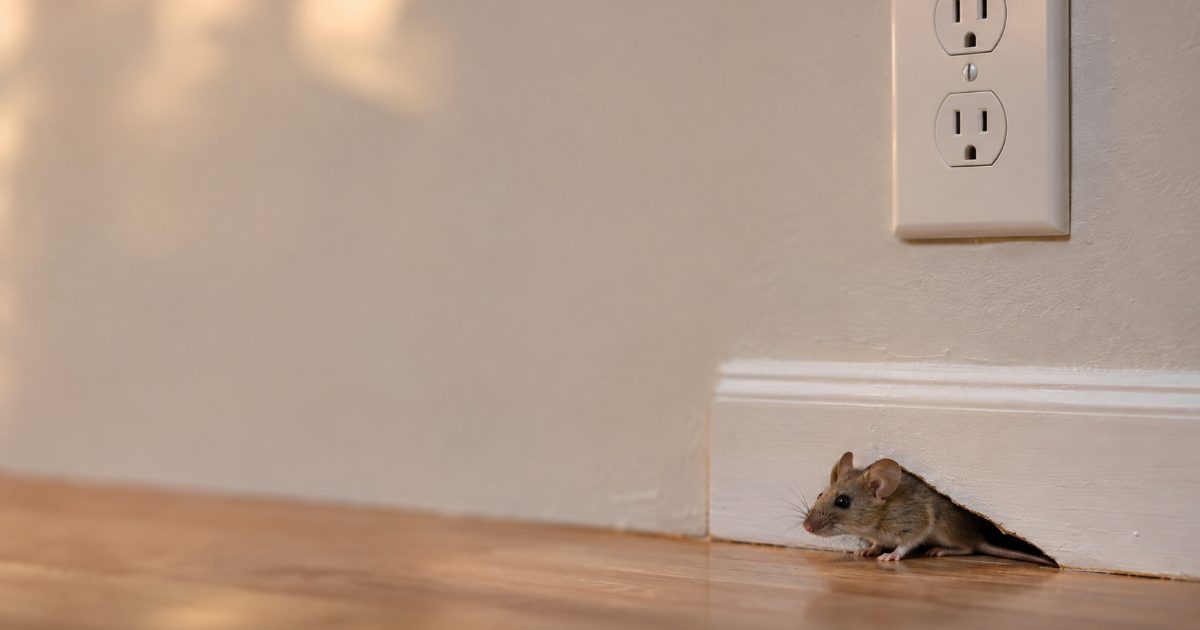
Mice living in a wall void do not stay inside it. They come out every night to eat, and they travel along walls with their whiskers touching the surface. That habit is what you use against them.
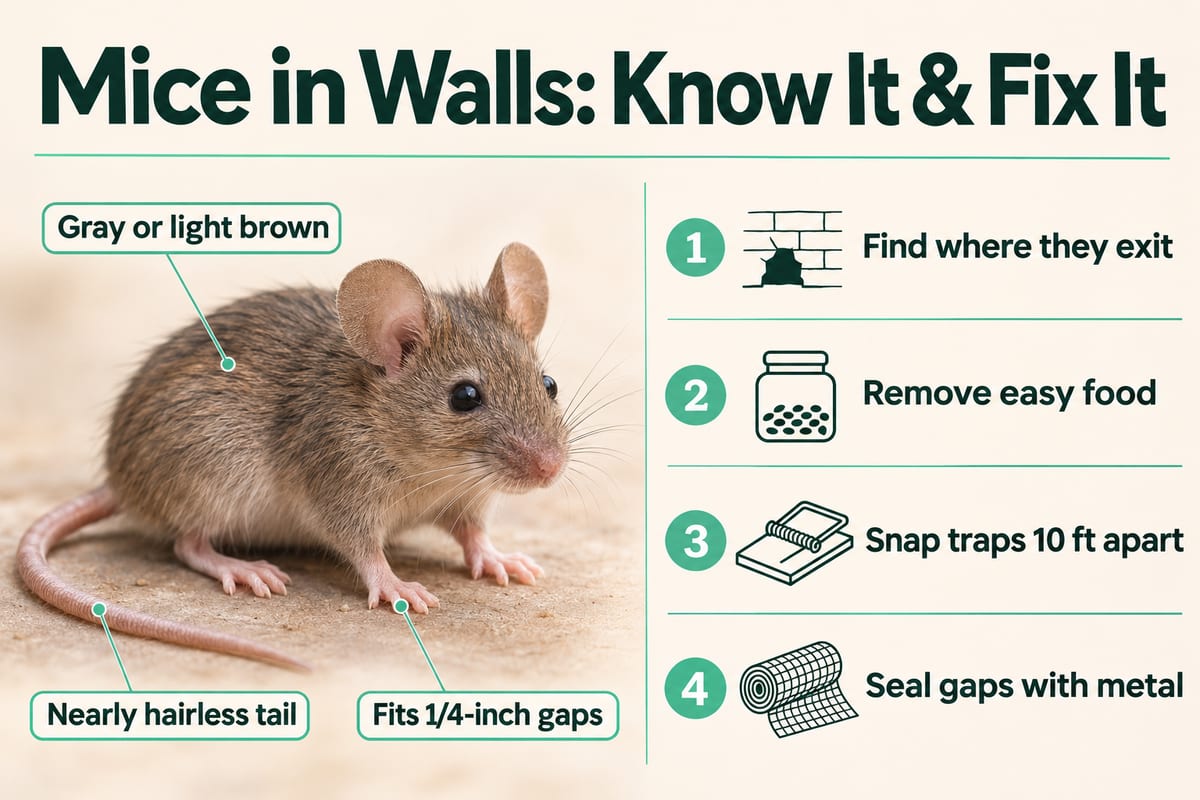
- Find where they come out. Look for droppings, gnaw marks, and greasy rub marks near baseboard gaps, behind the stove and fridge, under sinks where pipes enter the wall, and around the water heater and furnace.
- Remove easy food. Move cereal, pet food, birdseed, and snacks into glass, metal, or thick plastic containers with tight lids. Wipe crumbs off counters and floors.
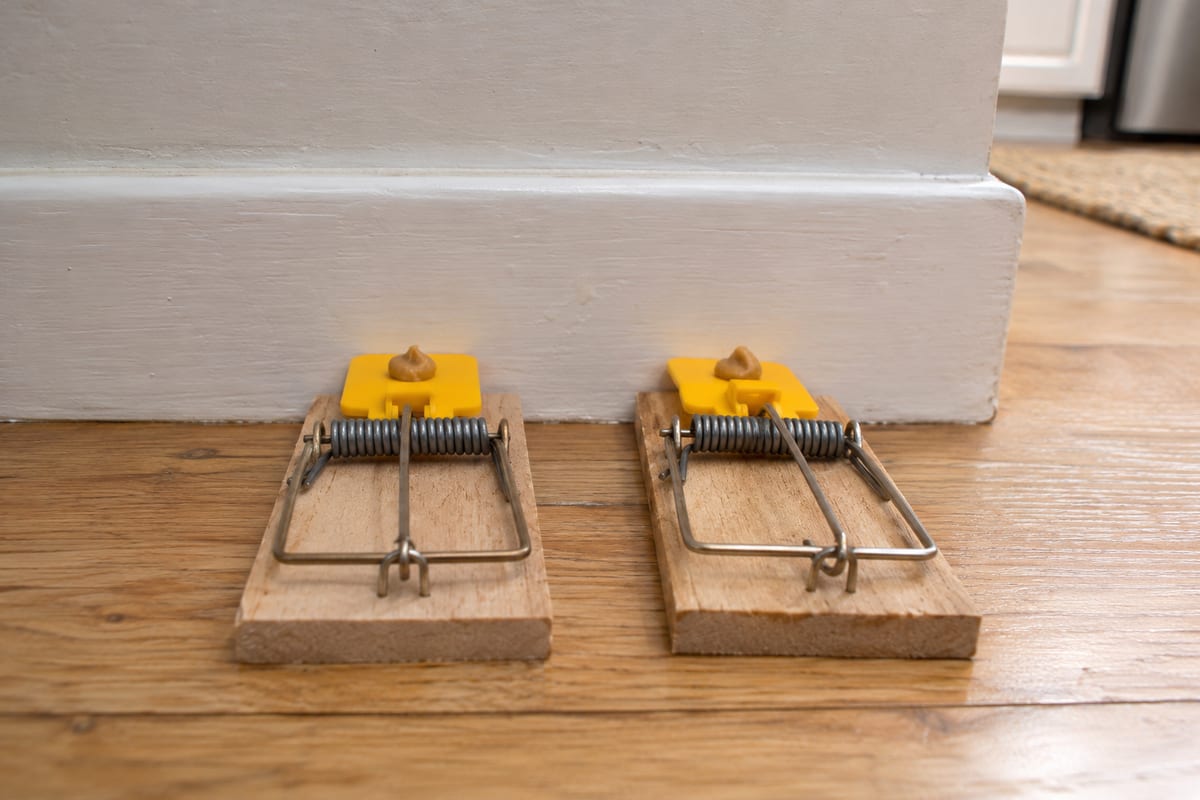
- Set snap traps against the wall. Place each trap so the baited end touches the wall and the trap forms a "T" with it. Use a pea-sized dab of peanut butter or a small tuft of cotton ball.
- Set plenty of them. Put traps no more than about 10 feet (3 m) apart in every area with signs of mice. Pairs set 1 to 2 inches apart catch mice that jump over a single trap.
- Check traps every morning. Mice are most active after dusk and before dawn. Remove catches with gloves and reset.
- Seal the gaps once catches slow down. Close openings with metal-based materials (details below). Sealing locks out new mice and stops survivors from slipping back into the wall.
Signs it’s mice in the walls (and not something else)
Most people first notice mice by sound: scratching, scurrying, or squeaking inside a wall or ceiling, mostly at night. University of Nebraska–Lincoln Extension notes that people are often surprised how much noise house mice can make.
Confirm it with physical signs:
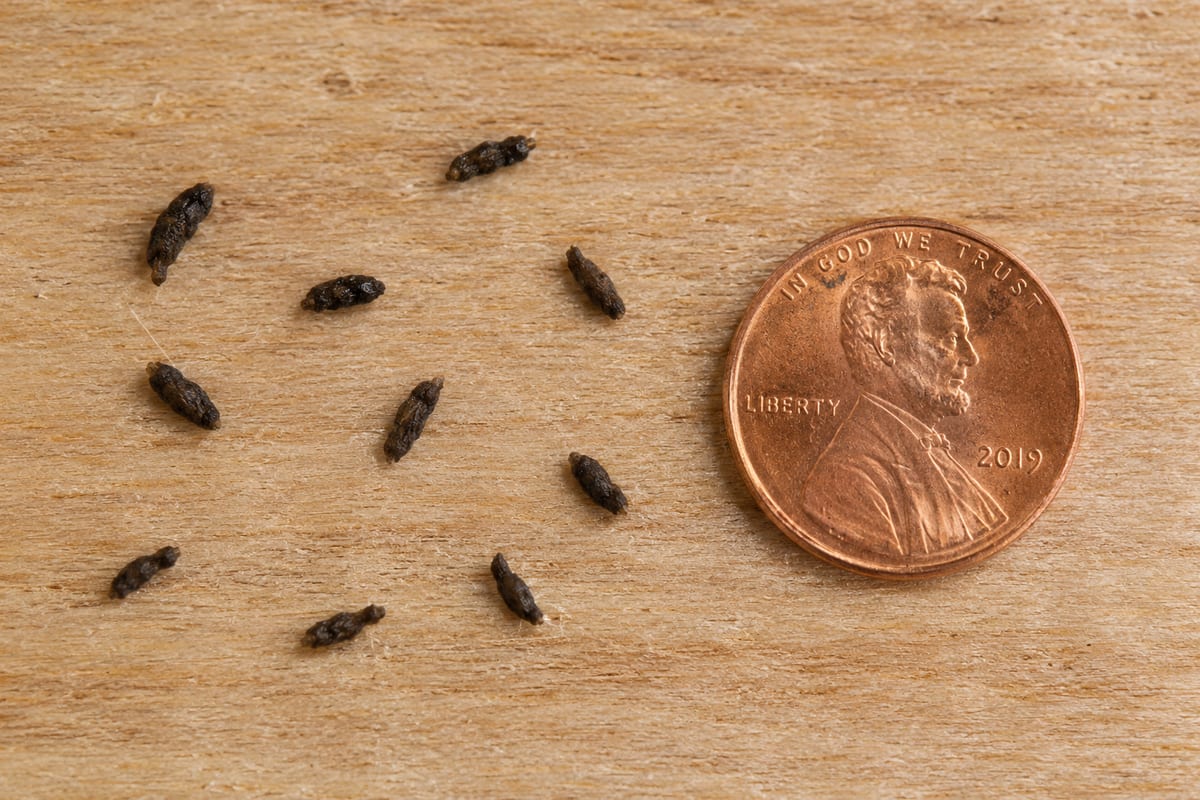
- Droppings: about 1/8 to 1/4 inch (3–6 mm) long, black, with one or both ends pointed. One mouse can leave 50 to 75 a day, scattered rather than piled.
- Gnaw marks: tiny, about 1/32 inch wide, on baseboards, cardboard, and food packages.
- Nests: wads of finely shredded paper, fabric, or insulation, often near warm appliances.
- Smell: a musky odor in areas with a long-term infestation. If you notice a stale or damp smell without these signs, read our guide to finding the source of a musty smell in your house.
| What you notice | Most likely | What to check |
|---|---|---|
| Light scratching at night, along the bottom of a wall | House mice | Droppings near baseboards, under sinks, behind appliances |
| Louder thumps or gnawing; droppings clearly larger than a grain of rice | Rats | Larger droppings, bigger holes and gnaw marks |
| Noise high in walls or ceiling, mostly by day | Squirrels or birds | Roofline and attic for larger holes |
| Sounds coming from the ceiling, not the wall | Mice traveling from the attic | Insulation tunnels and droppings in the attic |
Source: University of Nebraska–Lincoln Extension, Controlling House Mice (G1105); UC IPM Pest Notes: House Mouse.
If the noise is overhead, the mice may be living mainly in the attic and using the walls as highways. Our guide on how to get rid of mice in the attic covers that part of the house, including cleaning contaminated insulation.
Why mice in walls won’t leave on their own
A wall void is close to ideal for a mouse: dark, sheltered, near warmth, and often next to pipes that lead straight to the kitchen. Waiting it out rarely works.
House mice breed fast. UC IPM reports that a single female can have 5 to 10 litters a year of about 5 or 6 pups each, and the young can breed within 5 to 6 weeks of birth. They also eat up to 20% of their body weight a day in around 200 small meals, so they keep coming out to feed.
There is also a safety reason to act. Mice gnaw on wires inside walls, and UC IPM notes that many fires of unknown origin are believed to be caused by rodents gnawing on wiring.
Where to trap: mice exit walls in predictable places
You do not need to reach into the wall. Mice seldom travel more than about 30 feet (9 m) from their nest and food, so their exit points are close to where you find droppings.
Put traps at these spots:
- Where pipes or drains enter the wall under kitchen and bathroom sinks
- Behind the refrigerator, stove, and dishwasher
- Next to the water heater, furnace, and washer/dryer hookups
- At gaps under baseboards and along the base of cabinets
- In the basement along the sill plate, where the wall framing sits on the foundation
- Above drop ceilings, if you have them
Extension guidance for mice living in wall spaces points to the same exits: along pipes, above drop ceilings, and on foundation sill plates.
How many traps? More than you think. University of Nebraska–Lincoln Extension says about two dozen properly placed snap traps is enough for a new infestation in a 1,500 sq ft (140 m²) home. Using a few traps for weeks lets the population keep breeding.
Which traps? CDC recommends traditional snap traps and advises against glue traps and live traps, because a frightened, stuck mouse can urinate and raise your risk of disease. Traps with an expanded trigger plate catch more mice, and the trigger should be set to fire easily. Electric traps also work but cost more.
What about live traps? Releasing mice outdoors does not solve the problem. UC IPM notes that mice moved as far as half a mile can find their way back.
Sealing mice out: gaps as small as 1/4 inch
Exclusion is the step that makes the result last. UC IPM calls it the most successful and permanent form of house mouse control. CDC puts the size in plain terms: a mouse can fit through a hole the width of a pencil, about 1/4 inch (6 mm).
Inspect inside and outside:
- Inside: pipe and cable holes under sinks and behind appliances, gaps around floor vents and dryer vents, holes behind the stove, and floor drains.
- Outside: the gap between the foundation and siding, utility line entries (gas, AC lines, cable, electric), dryer vents, garage door corners, and doors without weatherstripping.
Then match the material to the gap:
| Gap | Use | Avoid |
|---|---|---|
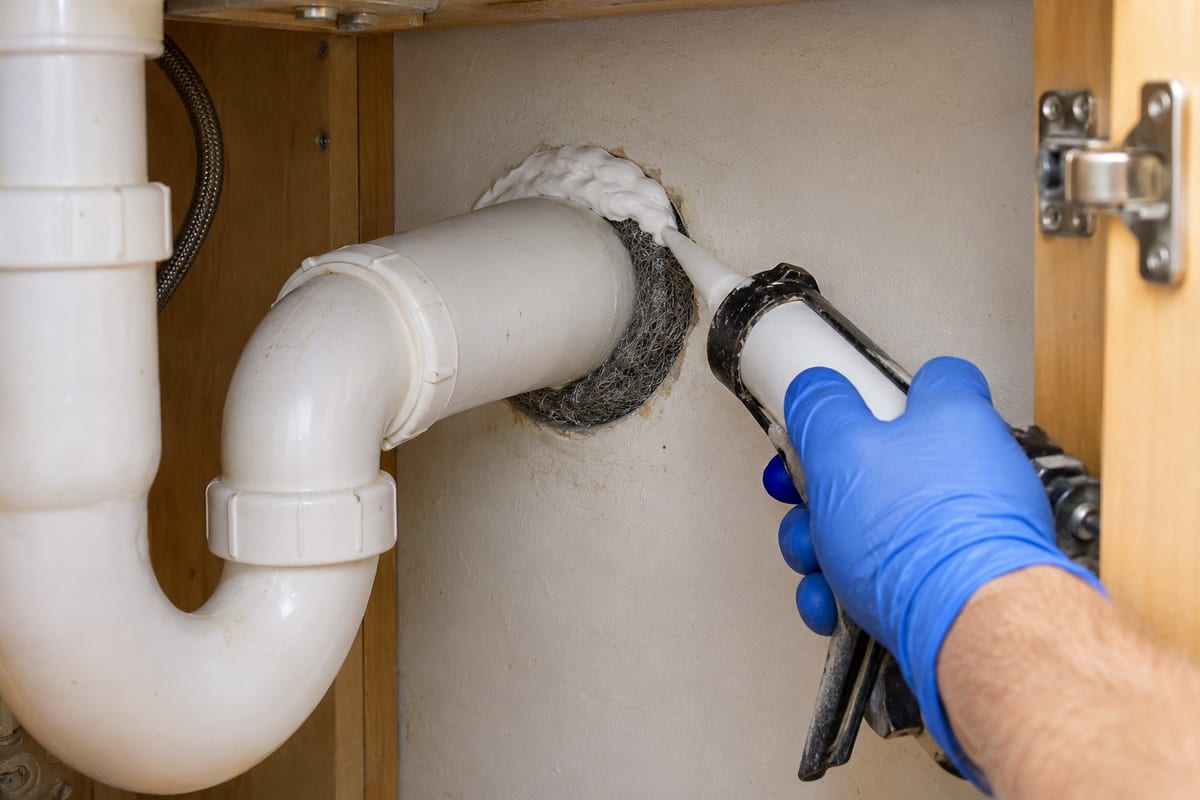
| Under 1/2 inch (13 mm) around pipes and wires | Steel wool or copper mesh packed in, then caulk or mortar over it | Caulk or foam alone |
| 1/2 inch to a few inches | Copper or stainless steel mesh plus sealant; 1/4-inch (6 mm) hardware cloth | Plastic screening, rubber, vinyl |
| Larger holes, foundation cracks | Sheet metal, aluminum flashing, cement or mortar | Wood or thin boards (gnawable) |
| Door bottoms and edges | Metal-backed door sweeps; metal edging where mice gnaw | Foam or rubber-only sweeps |
Source: CDC, How to Seal Up to Prevent Rodents; UC IPM Pest Notes: House Mouse; UNL Extension G1105.
Steel wool works as a plug but can rust over time, so copper or stainless steel mesh lasts longer in damp spots. Expanding foam on its own is easy for mice to chew through. Use it only to hold metal in place, as CDC describes.
Poison bait and the dead-mouse-in-the-wall problem
Many people search for a fast fix and end up with bait blocks. Inside a house, this often backfires.
Mice rarely travel far from the nest, so a poisoned mouse is likely to die where it lives: inside your wall. University of Nebraska–Lincoln Extension calls the idea that poisoned mice go outside looking for water “little more than hopeful speculation.” Whether the carcass smells depends on how many mice died, where, the humidity, and the airflow.
If you do use a rodenticide:
- Follow the label. The label is the law, and it tells you exactly where the product can be used.
- Use only ready-to-use, tamper-resistant bait stations. EPA no longer allows loose pellets in consumer rodenticide products.
- Keep stations where children and pets cannot reach them, and never use an outdoor-only product indoors.
- Expect to trap afterward to confirm the mice are gone.
If you already smell a dead mouse in the wall, try to locate it by following the odor and any flies. If you can pinpoint it, a small access hole cut in the drywall (later patched) lets you remove it. If you cannot find it, ventilation helps until it dries out. A pest professional can sometimes locate it faster.
What doesn’t work (and why)
- Ultrasonic plug-in repellers. UC IPM explains that ultrasonic sound is directional, does not penetrate behind objects (such as drywall), and fades quickly with distance. Researchers have found little evidence that sound, magnetic, or vibrating devices drive established mice out of buildings.
- Peppermint oil and other scents. We found no university extension or government guidance that recommends peppermint oil for removing mice from a house. The recommended methods are trapping and exclusion.
- Mothballs in walls or vents. Mothballs are pesticides labeled for fabric pests in closed containers. NPIC warns that using them in a way the label does not allow is illegal and can harm people and pets. The fumes also end up in your living space.
- Spray foam alone. Mice chew through it. UC IPM lists expanding foam, plastic, rubber, vinyl, and wood as ineffective for plugging mouse holes.
- Relying on a cat. Pets catch the occasional mouse, but extension experts note that mice live in places predators cannot reach, and pets rarely provide real control.
- Glue boards. Adult mice often detect and avoid them, so you mostly catch young ones. CDC also advises against them.
Cleaning up droppings safely
Mouse droppings and urine can carry disease. UC IPM lists leptospirosis, salmonella, and lymphocytic choriomeningitis (LCM), and mouse urine is a major indoor allergen. Clean the way CDC recommends:
- Open doors and windows for 30 minutes before you start, and leave the area during that time.
- Put on rubber or plastic gloves.
- Spray droppings and urine with an EPA-registered disinfectant or a fresh bleach solution of 1.5 cups bleach per gallon of water (1 part bleach to 9 parts water) until very wet.
- Let it soak 5 minutes, or as long as the disinfectant label says.
- Wipe up with paper towels and throw them away in a sealed bag.
- Double-bag dead mice and disposable traps, wash your gloved hands, remove the gloves, and wash your hands with soap and warm water.
Do not sweep or vacuum droppings, urine, or nests. That puts dust and germs into the air you breathe. Never mix bleach with ammonia or other cleaners.
If you get a fever within days of handling mice or droppings, see a doctor and mention the exposure.
When to call a professional
DIY trapping and sealing handles most cases of mice in walls. Bring in a licensed pest professional when:
- You are still catching mice after two weeks of steady trapping
- You hear activity in many walls or on more than one floor
- You cannot find or reach the entry points, such as high on the exterior or behind finished walls
- You smell a dead mouse and cannot locate it
- Someone in the home has asthma, allergies, or a weakened immune system
- You see chewed wiring (also call an electrician)
A good pro will inspect the outside of the house, seal entry points, and set a trapping plan, not just leave bait stations.
Mice that get into walls often also move into cars parked in garages over winter. If that is a concern, see how to keep mice out of your car.
Mice in walls checklist
- Find exit points: droppings, gnaw marks, and rub marks near pipes, appliances, and baseboards
- Store food and pet food in sealed containers
- Set snap traps in a “T” against the wall, about 10 feet apart or closer
- Check traps every morning; reset with gloves
- Seal gaps over 1/4 inch with steel wool, copper mesh, metal, or mortar
- Skip ultrasonic devices, mothballs, and foam-only patches
- Clean droppings wet with disinfectant, never by sweeping or vacuuming
- Keep trapping until a full week passes with no catches and no new droppings
Frequently asked questions
Will mice in walls go away on their own?
Rarely. A wall void gives mice shelter, and a female can raise 5 to 10 litters a year, so a few mice can become many. Mice leave the wall to find food, which is your chance to trap them, but they will not move out just because you wait.
What do mice in walls sound like?
Light scratching, scurrying, and sometimes squeaking, usually at night or just before dawn when mice are most active. University of Nebraska–Lincoln Extension notes that people are often surprised how much noise a few house mice can make inside ceilings and walls.
Should I cut a hole in the drywall to get mice out?
Usually not. Mice leave the wall to feed every night, so traps set along the wall where they come out work without opening anything. Cut an access hole only if you need to reach a dead mouse causing odor or a nest you can locate exactly.
How do I get rid of mice in walls without poison?
Use snap traps placed tight against the wall near outlets, pipes, and baseboard gaps, about 10 feet apart or closer. Then seal entry gaps with steel wool or copper mesh plus sealant, or with metal and mortar for bigger holes. This is the method extension services recommend for homes anyway.
Can mice in walls make you sick?
They can. House mice can carry leptospirosis, salmonella, and lymphocytic choriomeningitis (LCM), and their urine is a major allergen linked to asthma in sensitive children. Clean droppings with disinfectant and gloves, never by sweeping or vacuuming.
How do I know the mice in my walls are gone?
CDC uses a simple test: if you catch nothing for a week and see no new droppings or other signs, the rodents are gone. Keep a few traps set near former hot spots anyway, especially in fall, when mice move indoors.
Sources
- UC IPM — Pest Notes: House Mouse (Pub. 7483, rev. July 2025)
- University of Nebraska–Lincoln Extension — Controlling House Mice (G1105)
- CDC — How to Seal Up to Prevent Rodents
- CDC — How to Trap Up to Prevent Rodents
- CDC — How to Clean Up After Rodents
- US EPA — Restrictions on Rodenticide Products
- NPIC — Mothballs: Regulation
- US EPA — Introduction to Pesticide Labels