How to Get Rid of Mice in the Attic and Clean Up the Insulation
Contents
- How to get rid of mice in attic spaces: first 48 hours
- Signs of mice in the attic vs. squirrels or rats
- How mice get into the attic: roofline, soffits, and vents
- Sealing attic entry points that are 1/4 inch or larger
- Mice in attic insulation: what the damage means
- Cleaning contaminated insulation the CDC way
- What doesn’t work (and why)
- When to call a professional
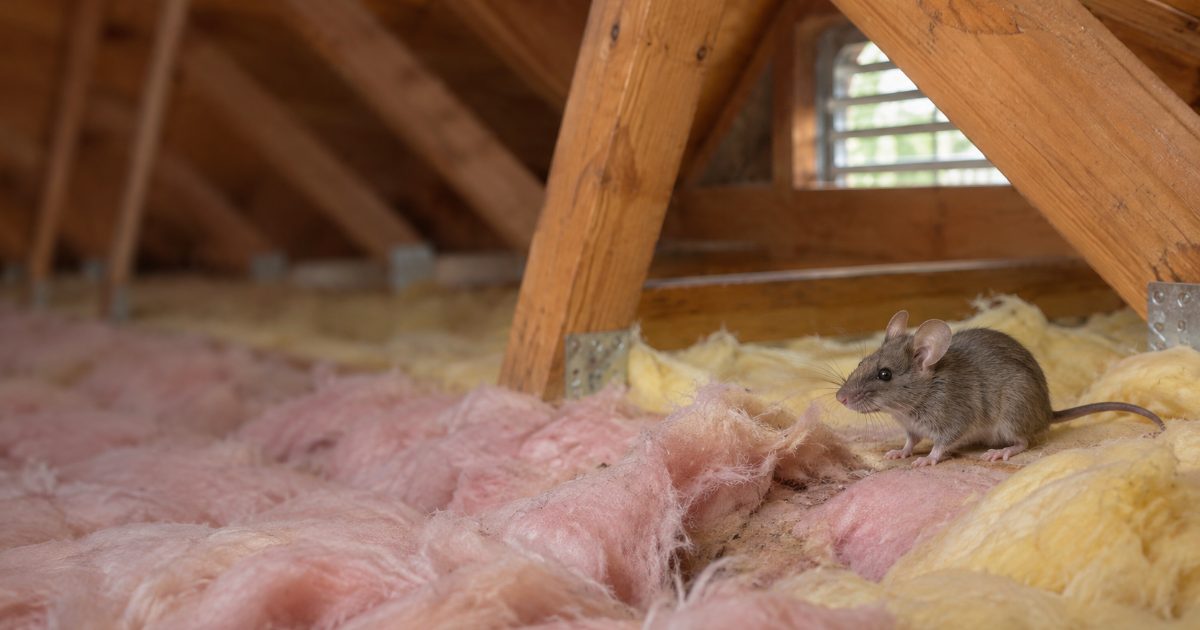
To get rid of mice in the attic, set snap traps along the joists and runways where you find droppings, seal every gap larger than 1/4 inch (6 mm) at the roofline and vents, and then clean up soiled insulation the CDC way: wet it with disinfectant first, bag it, and never sweep or vacuum dry droppings. Trapping removes the mice you have. Sealing stops the next ones. Cleanup protects your lungs and your energy bill.
- What works: snap traps on joists and top plates, metal-based sealing at eaves, soffits, gables, and vents, and wet cleanup of droppings.
- How long: trap until you go one full week with no catches and no fresh droppings, then seal.
- Call a pro if: droppings cover a large area, insulation is soaked or full of nests, or you cannot safely reach the roofline.
How to get rid of mice in attic spaces: first 48 hours
Do this before you buy anything special. An attic is a hot or cold, dusty space with poor footing, so plan the work before you go up.
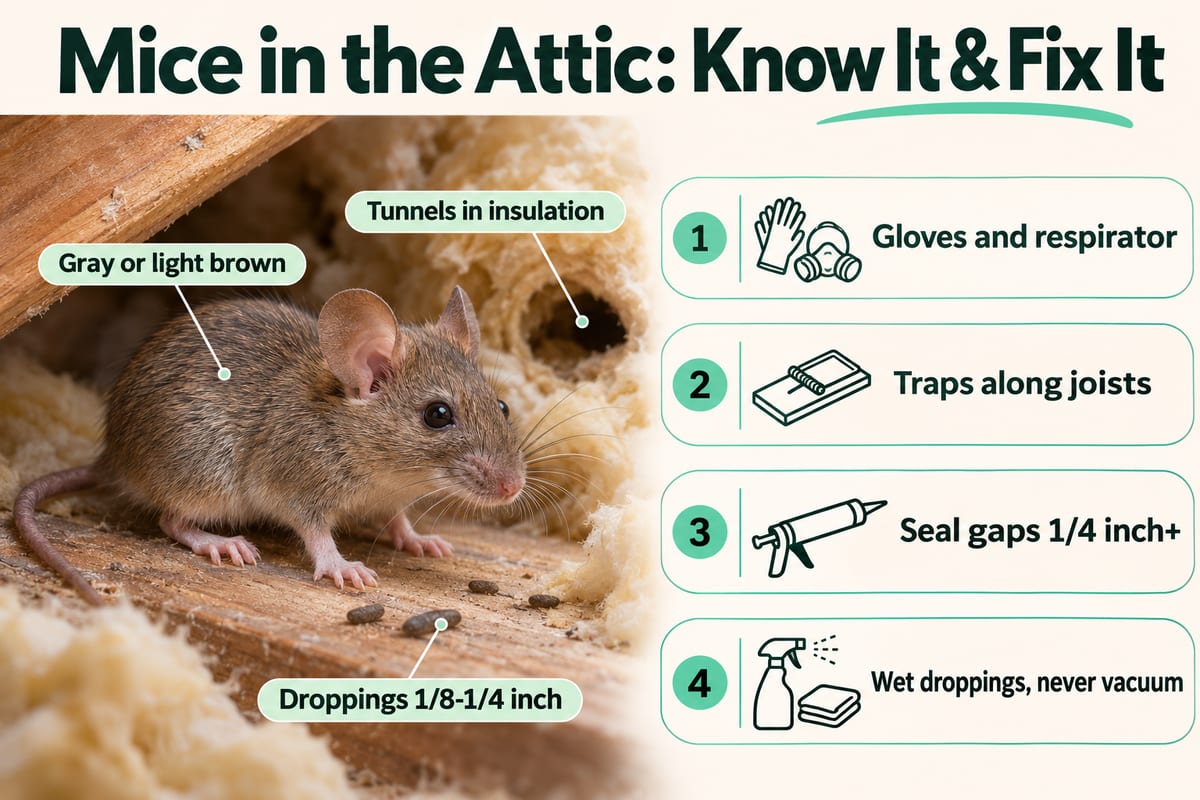
- Gear up before you go in. Wear rubber or plastic gloves and a fitted respirator if you can already see droppings. Do not stir up dust or sweep anything aside to make room.
- Look, don't touch. With a flashlight, note where droppings are thickest, where insulation has tunnels or nests, and where daylight shows through at eaves, vents, or gable ends.
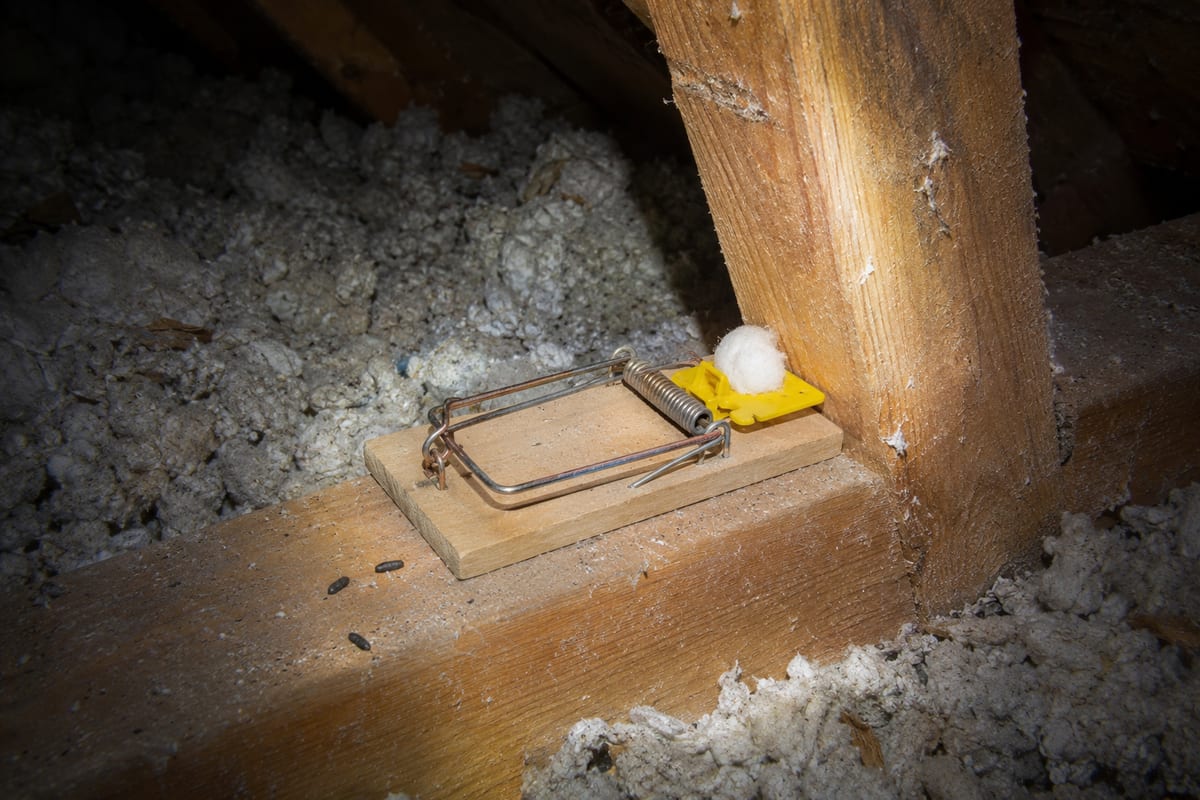
- Set snap traps on the runways. Mice travel along edges: joists, top plates, rafters, and the edges of the attic floor. Set traps on those surfaces and on boards laid over insulation near droppings, with the trigger end against the beam or wall.
- Use plenty of traps. Space them no more than about 10 feet (3 m) apart where you see activity. Set some in pairs, 1 to 2 inches apart.
- Bait for attic conditions. Peanut butter dries out in a hot attic. A small tuft of cotton ball works as nesting bait and lasts longer.
- Check traps daily. A dead mouse in a warm attic smells quickly. Remove catches with gloves and double-bag them.
- Trap below too. Set a few traps under sinks, behind appliances, and in the basement, because mice often travel between the attic and lower floors inside wall voids.
Signs of mice in the attic vs. squirrels or rats
The classic sign is light scratching or scurrying overhead at night. UNL Extension notes that mice can make scratching and squeaking noises from ceilings that surprise homeowners with how loud they are.
| What you find | Likely animal | Notes |
|---|---|---|
| Rice-sized black droppings, 1/8–1/4 inch (3–6 mm), scattered | Mice | One mouse leaves 50–75 a day |
| Small tunnels and flattened paths through insulation | Mice | Nests of shredded paper, fabric, or insulation |
| Noise at night, light and quick | Mice (or rats) | House mice are mostly nocturnal |
| Heavier footsteps, mostly in daytime | Squirrels | Look for larger chewed holes at the roofline |
| Much larger droppings and bigger gnaw holes | Rats | Need larger openings and bigger traps |
Source: University of Nebraska–Lincoln Extension, Controlling House Mice (G1105); UC IPM Pest Notes: House Mouse.
House mouse or deer mouse? It matters for cleanup. UC IPM describes the house mouse as overall gray or light brown with a nearly hairless tail. A deer mouse has larger eyes, a white belly with a sharp line where the dark back meets it, and a furred tail that is dark on top and light underneath. Deer mice and white-footed mice are the main hantavirus carriers in the US, and they are more common in rural and wooded areas.
How mice get into the attic: roofline, soffits, and vents
Mice are better climbers than most people expect. UC IPM notes they can run up any rough vertical surface and travel along wires and cables. That means brick, stucco, wood siding, downspouts, and utility lines are all ladders to your roof.
They need very little room. CDC says a mouse fits through a hole the width of a pencil, about 1/4 inch (6 mm). UNL Extension adds that mice are drawn to buildings when they detect openings and escaping heat, which is exactly what a leaky attic gives off in fall.
CDC’s checklist for the outside of a home points straight at the attic:
- Rafters, gables, eaves, and soffits. Gaps where the soffit meets the fascia or wall, damaged soffit panels, and open ends of the roof deck.
- Attic vents. Gable vents, ridge vents, and soffit vents with torn or missing screens.
- Utility entries. Holes where cable, electric, or plumbing vents pass through the roof or upper walls.
- The gap between roof and chimney, and the top of exterior walls where siding ends.
Inside the house, mice also reach the attic from below, up through wall voids from the basement, crawl space, or kitchen. If your noise is in the walls as much as the ceiling, our guide on how to get rid of mice in walls explains where they exit the wall and how to trap them there.
Sealing attic entry points that are 1/4 inch or larger
Exclusion is the step that keeps the attic mouse-free. UC IPM calls it the most successful and permanent form of house mouse control. Do it after trapping has thinned the population, so mice are not sealed inside.
| Attic entry point | Fix |
|---|---|
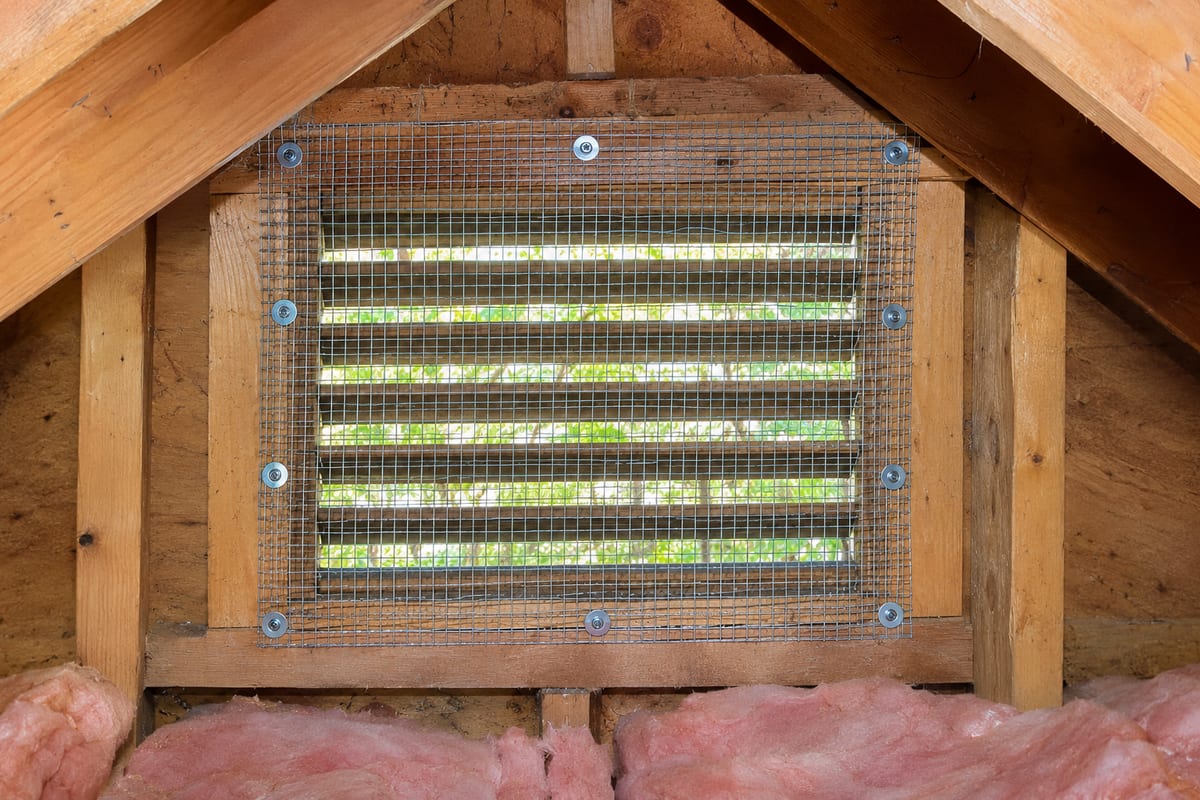
| Gable, soffit, or ridge vents with damaged screen | Cover with 1/4-inch (6 mm) galvanized hardware cloth, fastened with screws or staples; keep vents open for airflow |
| Gaps at soffit/fascia joints, eaves, roof edges | Sheet metal or aluminum flashing; copper mesh plus exterior sealant for narrow cracks |
| Pipe, cable, and wire penetrations | Pack steel wool or copper mesh, then seal with caulk or mortar |
| Holes in the attic floor around plumbing stacks, wiring, and lights | Metal mesh plus fire-rated sealant where required by code |
| Larger openings or damaged wood | Repair with metal or replace the wood; cover edges mice gnaw with metal |
Source: CDC, How to Seal Up to Prevent Rodents; UC IPM Pest Notes: House Mouse; UNL Extension G1105.
Do not block attic ventilation completely. Screen vents instead of plugging them, because the attic needs airflow to control heat and moisture.
Avoid plastic screening, rubber, vinyl, and expanding foam on its own. UC IPM lists all of them as ineffective, because mice chew through them. If ladder work at the roofline is beyond what you can do safely, this is a good job to hand to a pro.
Mice in attic insulation: what the damage means
Mice love insulation. It is warm, dry, and easy to shred into nests. UNL Extension lists insulation among the inaccessible spots where mice live.
The damage is not just cosmetic. In a University of Nebraska–Lincoln study, Scott Hygnstrom placed house mice in insulated panels for six months. All five insulation types tested (insulation board, fiberglass batt, rockwool, beadboard, and vermiculite) lost insulating value, and the mouse populations grew three- to fourfold inside the panels.
So when you inspect, sort the insulation into three groups:
- Light contamination: a few droppings on the surface. Disinfect and remove that spot.
- Moderate: tunnels, nests, and urine staining in part of the attic. Remove and replace those sections.
- Heavy: droppings spread across much of the attic, matted or urine-soaked insulation, a strong odor. Plan on full removal, usually by a professional with respiratory protection.
Cleaning contaminated insulation the CDC way
Most rodent-related illness comes from breathing in dust from dried droppings and urine. The National Park Service’s hantavirus guidance says that disturbing contaminated material, such as by sweeping, vacuuming, or moving nests, is the most common way people are exposed. Attics are dusty and enclosed, so this step matters.
For light to moderate contamination, follow CDC’s steps:
- Ventilate first. Open the attic hatch and any windows below it, run gable or attic fans if you have them, and leave for 30 minutes.
- Wear rubber or plastic gloves. Add a fitted respirator with HEPA (P100) filters and goggles in an attic, since dust is hard to avoid.
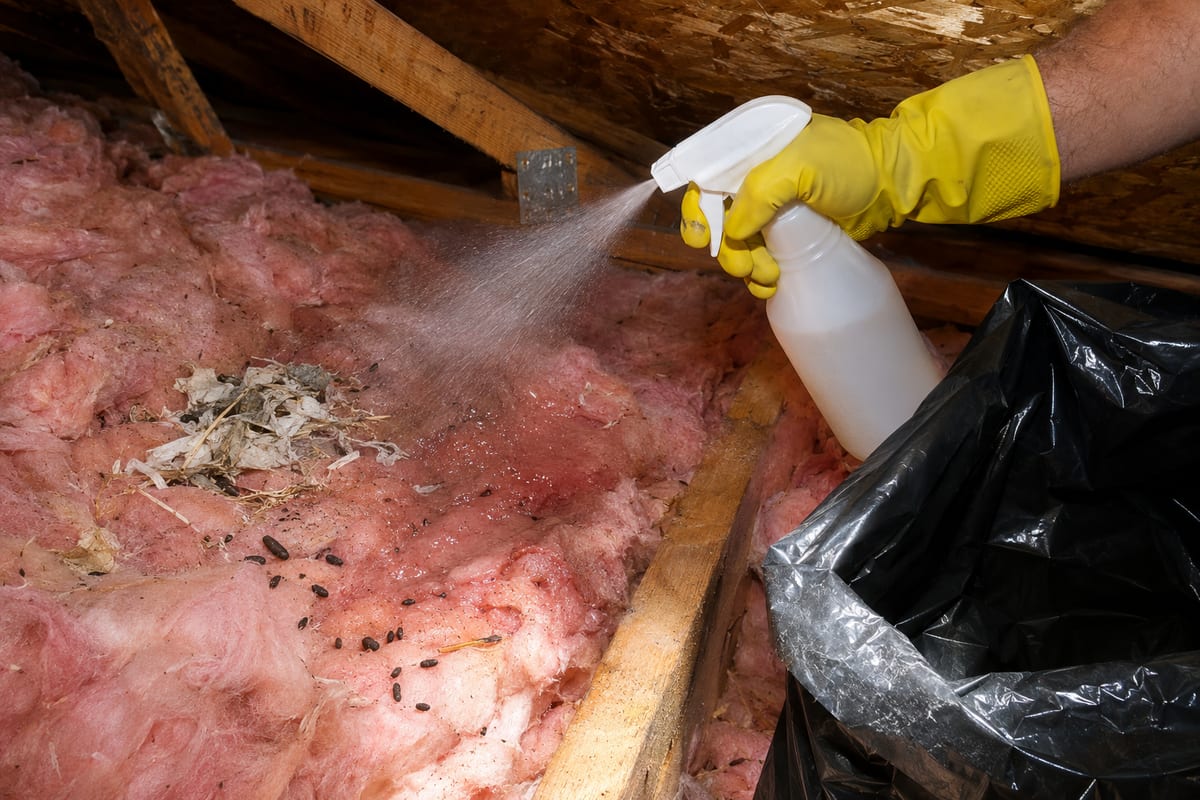
- Spray droppings, urine, nests, and the surrounding insulation with an EPA-registered disinfectant or a fresh mix of 1.5 cups bleach per gallon of water (1 part bleach to 9 parts water) until very wet.
- Let it soak 5 minutes, or as long as the disinfectant label says.
- Pick up droppings with paper towels. Place contaminated insulation directly into heavy plastic bags, as CDC directs, and seal them.
- Double-bag everything, including dead mice and disposable traps, and put it in an outdoor trash can with a lid.
- Wash gloved hands with soap and water or disinfectant, remove gloves, and wash your hands with soap and warm water.
Hantavirus symptoms can start 1 to 8 weeks after exposure, beginning with fever, muscle aches, headache, nausea, or vomiting. If you get sick after cleaning an attic, tell your doctor about the rodent exposure.
What doesn’t work (and why)
- Ultrasonic repellers. UC IPM explains that ultrasonic sound is directional, does not travel through or behind objects, and fades quickly with distance. In an attic full of joists and insulation, that leaves little effect. Researchers have found little evidence such devices drive out established mice.
- Mothballs tossed into the attic. Mothballs are pesticides labeled for clothes moths in sealed containers. NPIC warns that using them in ways the label does not allow is illegal and can harm people and pets. Attic fumes can also drift into the living space below.
- Peppermint oil or dryer sheets. We found no university extension or government guidance that recommends scents for removing mice. They do nothing about the gaps that let mice in.
- Poison bait in the attic. Mice rarely travel more than about 30 feet (9 m) from their nest, so a poisoned mouse is likely to die in your insulation, where it can be hard to find. If you use bait at all, use tamper-resistant bait stations, follow the label (the label is the law), and keep them away from children and pets.
- Live traps. CDC advises against live and glue traps, because a stressed mouse may urinate and increase your exposure. Released mice can also find their way back from as far as half a mile, according to UC IPM.
When to call a professional
Call a licensed pest professional, and possibly an insulation contractor, when:
- Droppings cover a large part of the attic, or insulation is matted, soaked, or full of nests
- You catch mice for more than two weeks, or new droppings keep appearing after sealing
- Entry points are high on the roofline and you cannot work there safely
- You have no attic access, or only a small hatch you cannot move around from
- You suspect deer mice, or someone in the home has asthma or a weakened immune system
- You find chewed wiring (also call an electrician)
Ask any pro to explain where the mice got in and what they will seal, not only how many bait stations they will place. Mice that winter in attics often move into cars parked in attached garages, so see how to keep mice out of your car if yours sits for days at a time.
Mice in attic checklist
- Inspect with a flashlight; note droppings, nests, tunnels, and daylight at eaves and vents
- Wear gloves and a respirator; do not sweep or vacuum
- Set snap traps on joists, top plates, and runways, about 10 feet apart or closer
- Bait with cotton or a small dab of peanut butter; check traps daily
- Seal roofline gaps over 1/4 inch with metal, hardware cloth, or mesh plus sealant
- Screen vents instead of blocking them
- Wet droppings and soiled insulation with disinfectant for 5 minutes, then bag it
- Replace insulation that is soaked, tunneled, or heavily contaminated
- Keep trapping until a full week passes with no catches and no new droppings
Frequently asked questions
How did mice get in my attic?
Usually from the outside at the roofline or up through the walls. CDC lists rafters, gables, eaves, soffits, and attic vents as common entry points, and house mice can climb rough siding and run along utility wires to reach them. They only need a gap about 1/4 inch (6 mm) wide.
Do I need to replace insulation after mice?
Not always. If droppings are limited to a small area, treat it with disinfectant and bag that section. If insulation is soaked with urine, full of tunnels and nests, or droppings are spread widely, remove and replace it, because research shows mouse activity measurably reduces insulating value.
Can mice in the attic make you sick?
Yes. Droppings, urine, and nesting material can carry pathogens, and stirring up the dust is the main way people breathe them in. Deer mice and white-footed mice carry hantavirus in the US, so wet everything with disinfectant before you touch it and never sweep or vacuum dry droppings.
Why do I hear mice in the attic at night but don't see them in the house?
House mice are mostly active at night, and an attic can supply shelter while food comes from outside or from small amounts inside. Mice that nest in the attic often travel down inside walls, so look for droppings under sinks and behind appliances too.
How do I get rid of mice in the attic naturally?
Snap traps and sealing are the non-chemical method extension services recommend for homes. Ultrasonic devices and scents such as peppermint oil are not supported by evidence, and mothballs used outside their label are illegal and unsafe.
How long does it take to get mice out of the attic?
It depends on how many mice there are and whether entry points are sealed. Use CDC's benchmark: keep trapping until a full week passes with no catches and no new droppings, then inspect again in fall, when mice move indoors.
Sources
- UC IPM — Pest Notes: House Mouse (Pub. 7483, rev. July 2025)
- University of Nebraska–Lincoln Extension — Controlling House Mice (G1105)
- Hygnstrom (1992), Impacts of House Mouse Activity on Five Types of Insulation — Vertebrate Pest Conference
- CDC — How to Clean Up After Rodents
- CDC — How to Seal Up to Prevent Rodents
- CDC — How to Trap Up to Prevent Rodents
- National Park Service — Hantavirus Fact Sheet and Cleaning Guidance (June 2025)
- NPIC — Mothballs: Regulation
- CDC — About Hantavirus
- US EPA — Introduction to Pesticide Labels